Beauty Spots · Worcestershire & Herefordshire
The Malvern Hills: Elgar, Spring Water, British Camp & the Best Walks
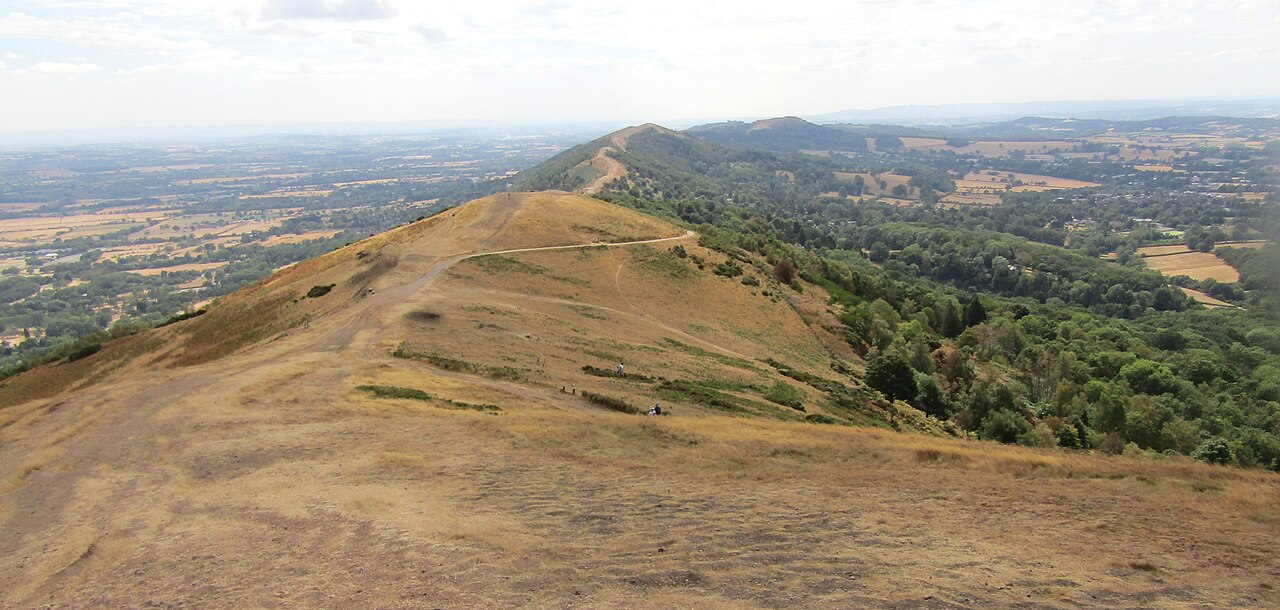
The Malvern Hills rise suddenly from the plain of the River Severn on the border of Worcestershire and Herefordshire, a narrow ridge about eight miles long. They were designated an Area of Outstanding Natural Beauty in 1959 and are now the Malvern Hills National Landscape.
Why The Malvern Hills Is Special
From the ridge of the Malverns you can see further than almost anywhere else in England. The views from the summit take in the Severn Valley, the hills of Herefordshire, the Welsh mountains, parts of thirteen counties and the cathedrals of Worcester, Gloucester and Hereford.
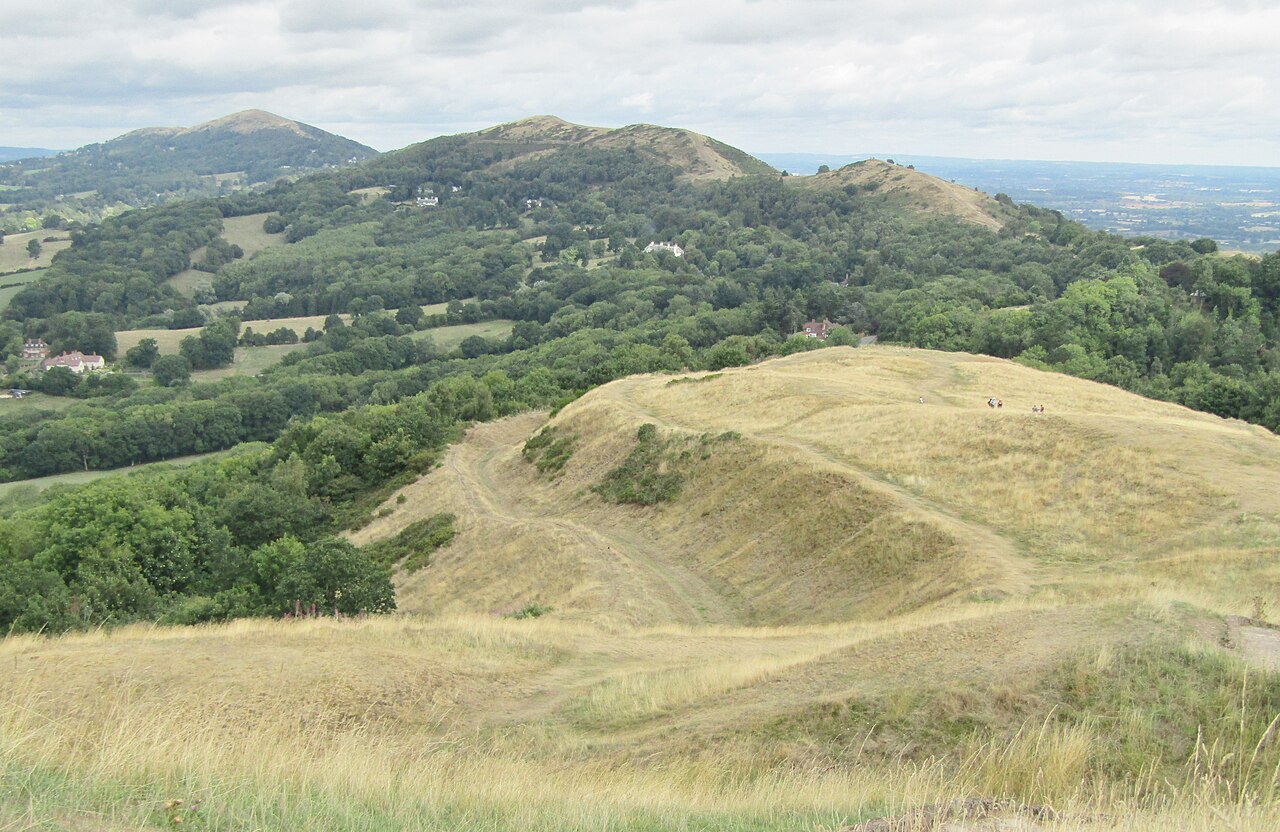
The walking is a joy: a switchback path along the grassy crest, with steep climbs, wide views on both sides and the spa town of Great Malvern below.
The History of The Malvern Hills
The highest point is the Worcestershire Beacon, 425 metres above sea level. Further south, the Herefordshire Beacon is crowned by British Camp, an Iron Age hill fort whose great ramparts ring the summit.
The hills are known for their spring water, first from holy wells and later from the Victorian spa town of Great Malvern, where visitors came to take the water cure. Malvern water was bottled commercially on a large scale and sold worldwide.
The composer Edward Elgar was born at Lower Broadheath nearby and spent much of his life walking and cycling in these hills, which inspired his music. He is buried at St Wulstan's church in Little Malvern.
What to See & the Best Walks at The Malvern Hills
Walk the ridge from Great Malvern up to the Worcestershire Beacon and along the crest towards British Camp. Climb British Camp itself for its ramparts and views.
In Great Malvern, see the Priory church with its medieval glass and tiles, and fill a bottle at one of the springs and wells that still flow on the hills.
Wildlife at The Malvern Hills
The grassy slopes are grazed by sheep and cattle, which keep the grassland open for wild flowers and butterflies. Look for skylarks and meadow pipits on the ridge, and ravens and peregrines over the quarries.
Gardens, Countryside & Antiques near The Malvern Hills
See the Malvern Hills National Landscape listing. Gardeners will enjoy Webbs Wychbold, and antiques hunters can head to Leominster Antiques Centre and Ludlow Antiques Market.
To the north-west lie the Shropshire Hills National Landscape, and the Cotswolds are to the south-east; see our guide to the Cotswolds.
The Malvern Hills Through the Seasons
Spring brings fresh green and skylarks to the ridge. Summer evenings are perfect for sunset walks. Autumn colours the woods on the lower slopes, and a clear winter day gives the longest views of all.
Getting to The Malvern Hills
Great Malvern and Malvern Link have stations on the line from Worcester to Hereford, and the town is the best starting point for the ridge.
The Malvern Hills: Questions & Answers
What is the highest point of the Malvern Hills?
The Worcestershire Beacon, 425 metres above sea level.
Where is Elgar buried?
At St Wulstan's church in Little Malvern.
Our Advice
Our advice: Walk from Great Malvern to the Worcestershire Beacon and on to British Camp on a clear day, and take the bus or a taxi back.
Facts checked October 2026. Sources: Wikipedia: Malvern Hills · malvernhills.org.uk. Opening times and prices change, so please check before you travel.