Beauty Spots · Somerset & Devon
Exmoor: Lorna Doone Country, Red Deer, Dark Skies & the Best Walks
Exmoor straddles the border between west Somerset and north Devon, a high moorland of heather and grass cut by deep wooded combes, which ends abruptly in a coast of towering hog's-back cliffs above the Bristol Channel. It was designated a National Park in 1954.
Why Exmoor Is Special
Exmoor is the meeting of moor and sea. You can walk across open heather to the summit of Dunkery Beacon, then drop down through oak woods to a tiny harbour, all in a single day.
It is one of the quietest of the National Parks, a place of red deer and wild ponies, and in 2011 it became Europe's first International Dark Sky Reserve.
The History of Exmoor
The highest point on Exmoor is Dunkery Beacon, 519 metres above sea level and the highest point in Somerset. On the coast, the hills reach 414 metres at Culbone Hill, and the cliffs here are among the highest in England.
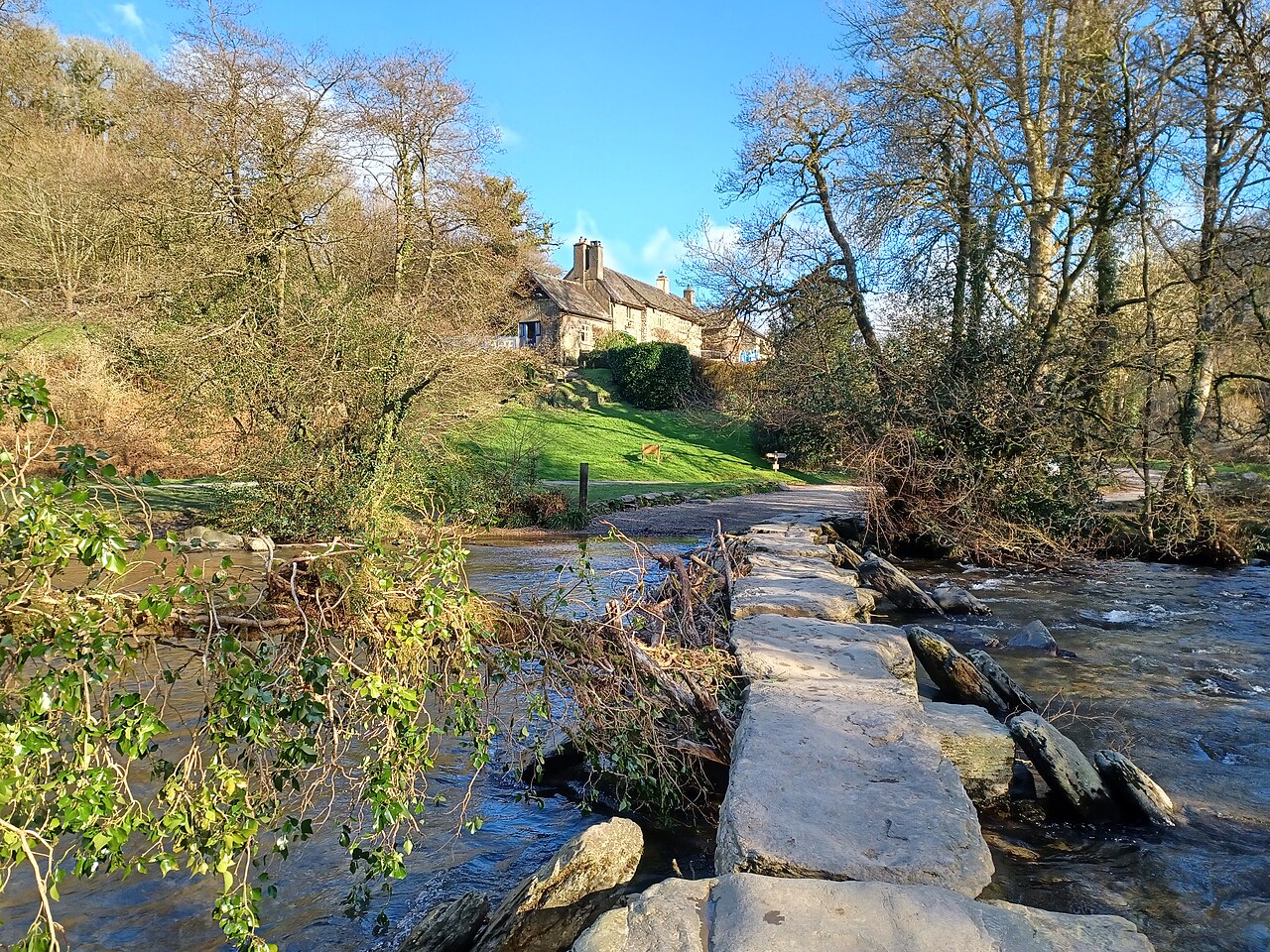
Tarr Steps, a clapper bridge across the River Barle, is 180 feet long with 17 spans of stone slabs, some weighing up to two tons. It is assessed as medieval in origin, although local legend says the devil built it.
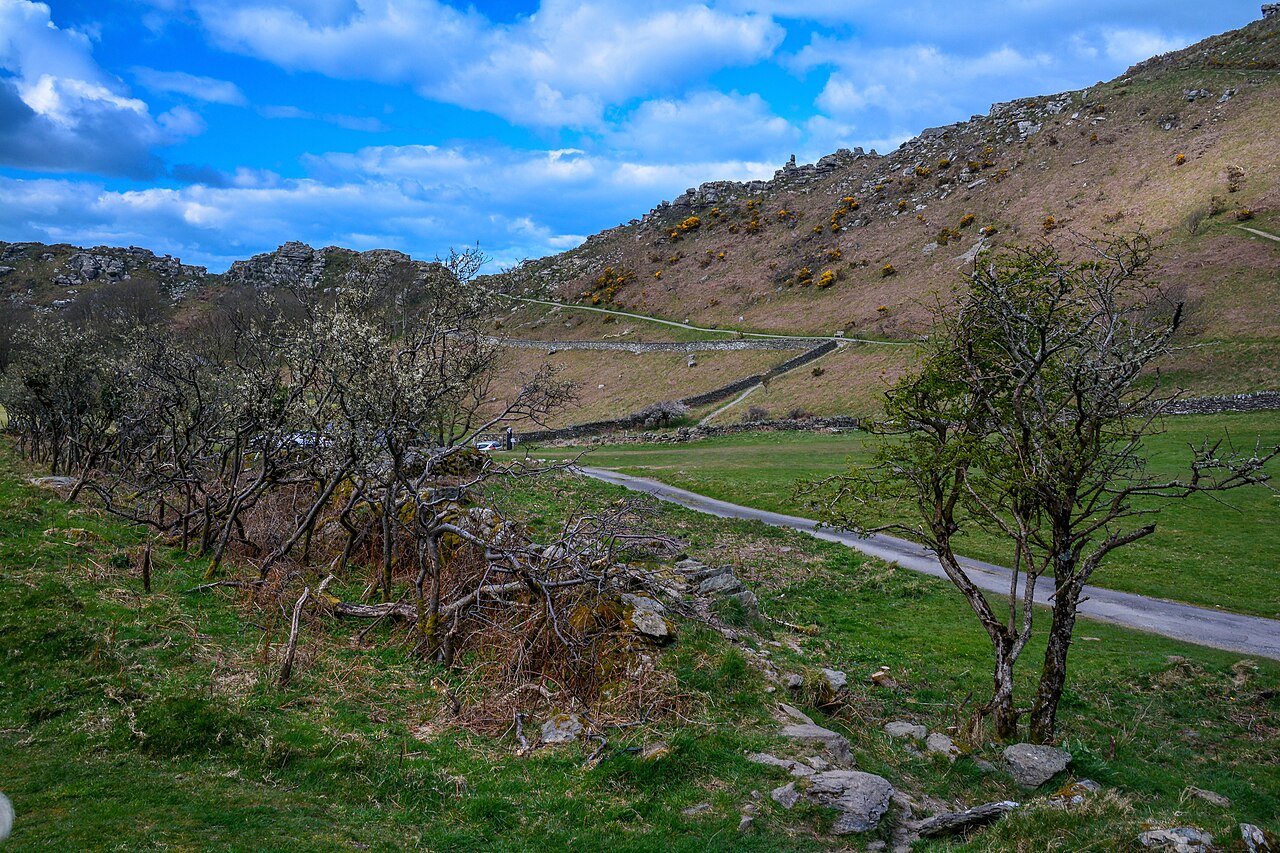
In 1869 R. D. Blackmore published Lorna Doone, a romance of outlaws set in the valleys of Exmoor, and visitors still come to see the Doone Valley above Malmsmead. Near Lynton, the Valley of Rocks is a dry valley of jagged crags where feral goats roam.
What to See & the Best Walks at Exmoor
Climb Dunkery Beacon from the road near Dunkery Gate for a view over the moor and across the Bristol Channel to Wales. Walk the circular path from Tarr Steps along the River Barle and back over the clapper bridge.
In Lynton, walk out to the Valley of Rocks, then ride the water-powered cliff railway down to Lynmouth. Visit the village of Selworthy with its thatched cottages and the medieval village of Dunster with its castle.
Wildlife at Exmoor
Exmoor is home to the largest herd of wild red deer in England; in October you may hear the stags roaring during the rut. Exmoor ponies, one of the oldest native breeds, graze the open moor. Please keep your distance from the deer and keep dogs on leads.
Gardens, Countryside & Antiques near Exmoor
See the Exmoor National Park listing and walk a stretch of the South West Coast Path, which starts at Minehead. The Quantock Hills National Landscape lies just east, and Hestercombe, with its Lutyens and Jekyll garden, is near Taunton.
Gardeners can visit RHS Garden Rosemoor to the south-west, and Clovelly is further along the north Devon coast; see our guide to Clovelly.
Exmoor Through the Seasons
Spring brings lambs and bluebells in the combes. In August and September the heather flowers on the high moor. October is the season of the red deer rut, and the long, clear winter nights are perfect for stargazing.
Getting to Exmoor
The nearest main-line station is Taunton or Tiverton Parkway, with buses to Minehead, Porlock and Dulverton. The West Somerset Railway, a heritage steam line, runs to Minehead in season.
Exmoor: Questions & Answers
Is Exmoor a Dark Sky Reserve?
Yes. In 2011 Exmoor became Europe's first International Dark Sky Reserve.
How old is Tarr Steps?
The clapper bridge is assessed as medieval in origin. It is 180 feet long, with 17 spans.
Our Advice
Our advice: Combine Tarr Steps and Dunkery in one day, stay overnight to see the stars, and go on an organised safari in autumn to see the red deer.
Facts checked October 2026. Sources: Wikipedia: Exmoor · Wikipedia: Tarr Steps · exmoor-nationalpark.gov.uk. Opening times and prices change, so please check before you travel.