Villages & Towns · Devon
Clovelly, Devon: History, the Cobbled Street & Things to Do
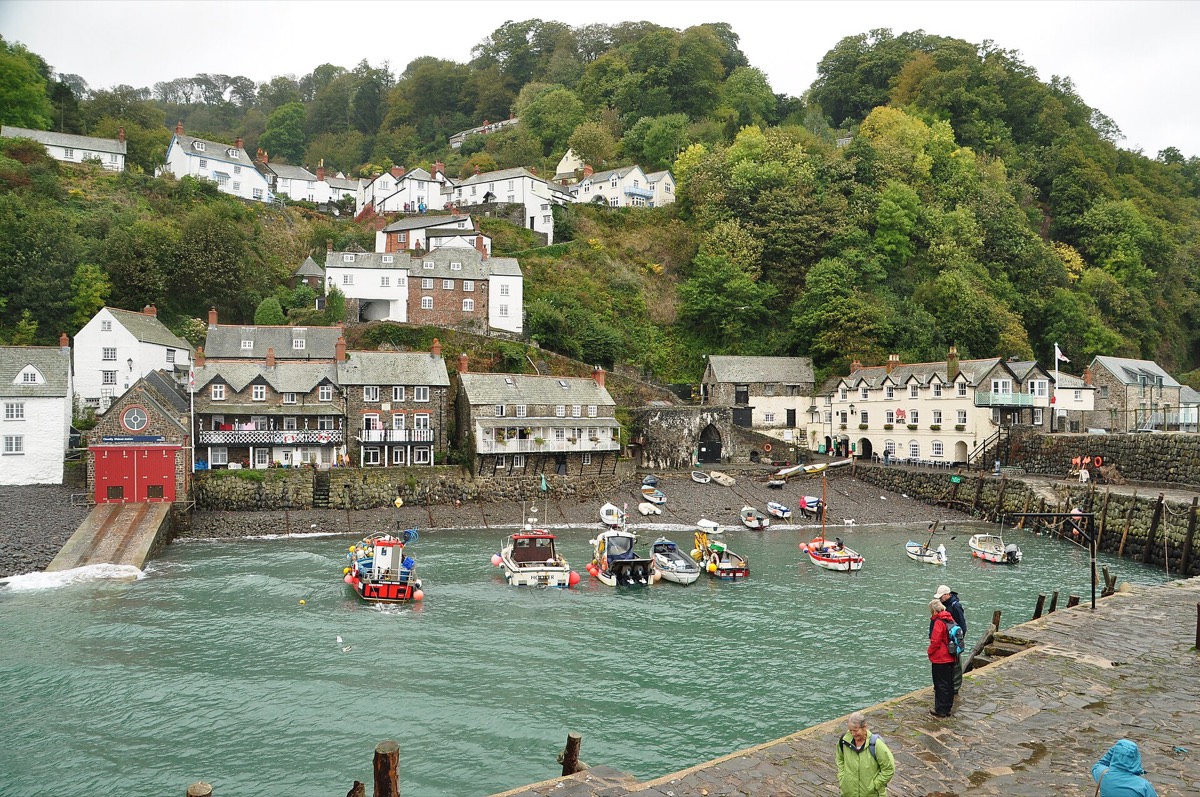
Clovelly clings to the wooded cliffs of the North Devon coast, its whitewashed cottages tumbling down a single steep cobbled street to a tiny harbour far below. There are no cars in the village: goods still go up and down on wooden sledges, and the donkeys that once carried them are still part of village life.
Why Clovelly Is Special
Clovelly is unlike any other village in England. It has been privately owned for centuries and run as a single estate, and that is why it has stayed so unspoilt: no modern buildings, no chain shops, only cottages, flowers, a harbour and the sea.
The walk down the cobbles, with views opening out across Bideford Bay, is one of the great experiences of the West Country.
The History of Clovelly
After the Norman Conquest the manor of Clovelly was taken by William the Conqueror from its Saxon tenant, and it appears in the Domesday Book of 1086 as Clovelie. Remarkably, the village has been associated with only three families since the middle of the 13th century.
In the late 14th century, during the reign of Richard II, the manor was bought by the judge Sir John Cary. Clovelly remained an agricultural parish until the late 16th century, when the squire, George Cary, built the stone breakwater that created the harbour and turned it into a fishing village. The Carys of Clovelly appear in Winston Graham's historical novel The Grove of Eagles.
In 1738 the Clovelly Estate was bought by the Hamlyn family, who have managed it ever since. The village owes much of its present beauty to Christine Hamlyn, who devoted herself to renovating and enlarging the old cottages and beautifying the village. Today the estate belongs to John Rous, a descendant of the Hamlyns, who inherited it from his mother in 1983 and lives at Clovelly Court.
Clovelly has long inspired writers and artists. The novelist Charles Kingsley lived here as a child from 1831 to 1836, while his father was curate and then rector, and the village features in his novel Westward Ho! (1855). Turner painted Clovelly Harbour around 1822, and Charles Dickens described the village in A Message from the Sea (1860).
The sea has given and taken. On 28 October 1838 twelve fishing boats with twenty-six men aboard left the harbour, and only one boat and its crew returned after a ferocious storm in the Bristol Channel; the disaster led to the founding of the Shipwrecked Mariners' Society the following year. A lifeboat station opened in 1870, and between 1899 and 1931 its crews saved 158 lives. The church of All Saints, the village's only Grade I listed building, was virtually all built in the 15th and early 16th centuries.
Things to Do in Clovelly
Entry to the village is through the visitor centre at the top, where the entrance fee covers parking, two museums, the gardens of Clovelly Court and an audio-visual history guide. Allow time and wear sensible shoes: the cobbles are steep and can be slippery.
On the way down, visit the Fisherman's Cottage and the Charles Kingsley museum, and at the bottom sit on the harbour wall by the Red Lion. The walk back up is steep. The walled kitchen garden at Clovelly Court, near the church, is a lovely contrast to the village.
Gardens, Countryside & Antiques near Clovelly
The South West Coast Path runs past the village, with wonderful walks along the wooded Hobby Drive and west towards Hartland Point. RHS Garden Rosemoor, at Great Torrington, is about half an hour away.
Exmoor National Park lies further east along the coast, and Dartmoor National Park is within reach for a longer trip.
Clovelly Through the Seasons
In spring and early summer the cottage gardens are bursting with flowers. Summer is busy, so arrive early or late in the day. Autumn brings dramatic seas and quieter streets, and winter is peaceful, though check opening times before you travel.
Getting to Clovelly
Clovelly is best reached by car; the visitor centre has a large car park at the top of the village. The nearest mainline railway station is Barnstaple, about twenty miles away.
Clovelly: Questions & Answers
Do you have to pay to enter Clovelly?
Yes. Visitors enter through the visitor centre, and the entrance fee covers parking, two museums, the Clovelly Court gardens and an audio-visual guide.
Why are there no cars in Clovelly?
The main street is a steep cobbled path down the cliff, so goods are moved on wooden sledges, and donkeys once did the carrying.
Our Advice
Our advice: Arrive early, walk down slowly and stop often to look back, have lunch by the harbour, and save energy for the climb back up. It is worth every step.
Facts checked October 2026. Sources: Wikipedia: Clovelly · clovelly.co.uk. Opening times and prices change, so please check before you travel.