Villages & Towns · Dorset
Corfe Castle, Dorset: History, the Ruined Castle & Things to Do in Purbeck
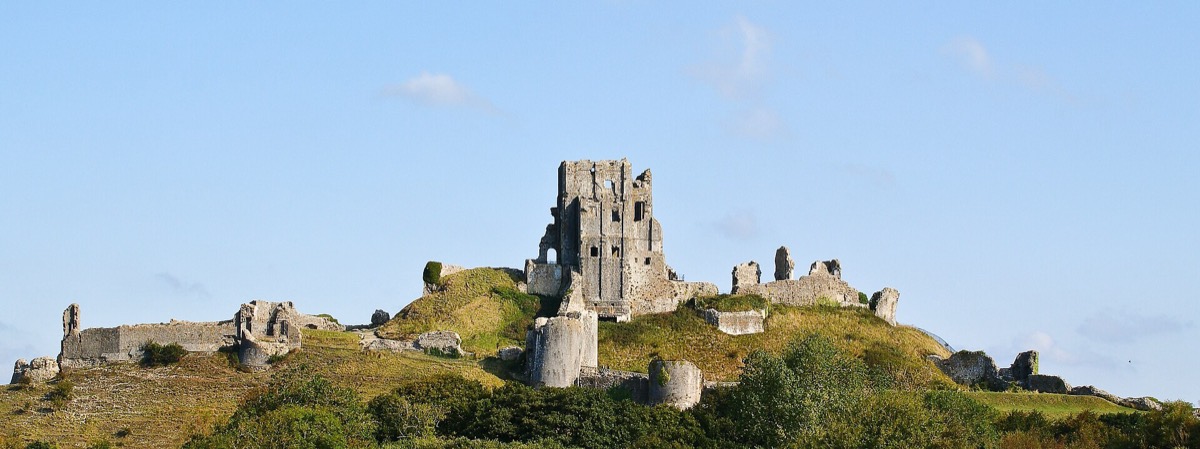
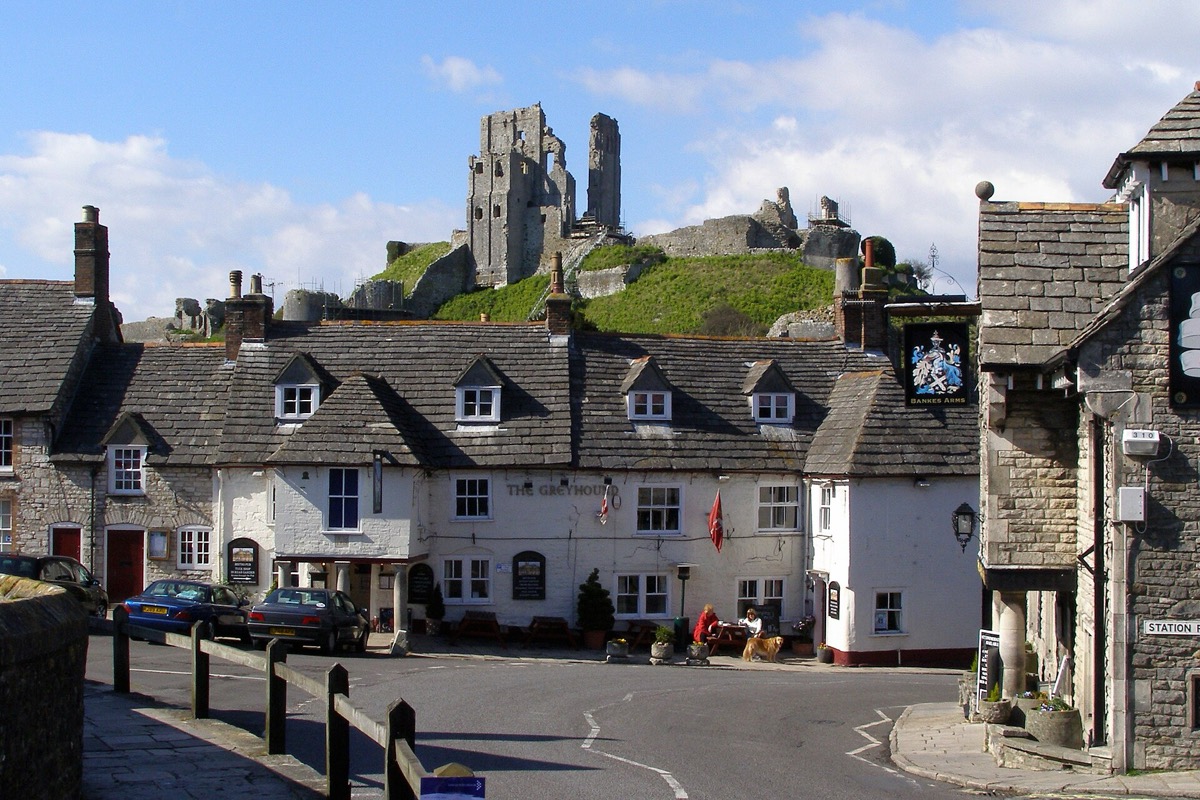
Corfe Castle is both a village and the great ruin that towers over it, guarding a gap in the Purbeck Hills on the road between Wareham and Swanage. The village is built almost entirely of grey Purbeck stone, and from almost every street you look up to the broken towers on their steep green mound.
Why Corfe Castle Is Special
There are few more dramatic sights in England than Corfe Castle at dawn or dusk, when mist fills the valley and the ruin rises above it. The castle and much of the village belong to the National Trust, so the setting has been protected from change.
Corfe is also the perfect base for exploring the Isle of Purbeck, with the Jurassic Coast, Studland's beaches and the heathland of Poole Harbour all within a few miles.
The History of Corfe Castle
The castle stands on a site that was already important before the Normans. Its most famous early event took place in 978, when the young King Edward, possibly aged sixteen, came to Corfe to visit his stepmother Elfrida and his half-brother and was murdered there on the evening of 18 March. He was later venerated as Edward the Martyr.
Soon after the Norman Conquest, William the Conqueror founded a castle here. Unusually for the 11th century it was partly built of stone, a sign of its high status. Henry I began the great stone keep in about 1096 or 1097, and it was complete by 1105. By the reign of King Stephen, Corfe was already a formidable fortress, and in 1139 it withstood a siege by the king himself.
King John spent large sums on Corfe, which he used as a royal fortress, treasury and prison; Eleanor, Duchess of Brittany, a potential rival to the crown, was held here until 1222. Henry III ordered the keep to be whitewashed in 1244, and in 1247 the growing village below was granted a market and a fair.
In 1572 Elizabeth I sold the castle to Sir Christopher Hatton, and in 1635 it was bought by Sir John Bankes. During the Civil War, while Sir John was away in London and Oxford, his wife, Lady Mary Bankes, led the defence of the castle through two Parliamentarian sieges. The first, in 1643, failed. By 1645 Corfe was one of the last Royalist strongholds in the south, and it fell after a siege ending in an assault. In March 1646 Parliament ordered the castle slighted, blowing it apart and leaving the ruin we see today.
The village had its own industries: in the 18th century ball clay quarrying grew, and in 1791 the merchant William Pike agreed to supply Josiah Wedgwood with 1,200 tons of clay. Mortons House, built in 1590, is one of the village's finest buildings. Corfe Castle returned members to Parliament until the Reform Act of 1832 abolished it as a rotten borough. Ralph Bankes later bequeathed the entire Bankes estate to the National Trust, including the castle, much of the village and the family home at Kingston Lacy.
Things to Do in Corfe Castle
Explore the castle ruins (National Trust; check opening times), climbing up through the gatehouses to the keep for views over Purbeck. Then visit the Corfe Model Village on the square, a 1:20 model showing the castle and village as they looked in 1646, before the slighting.
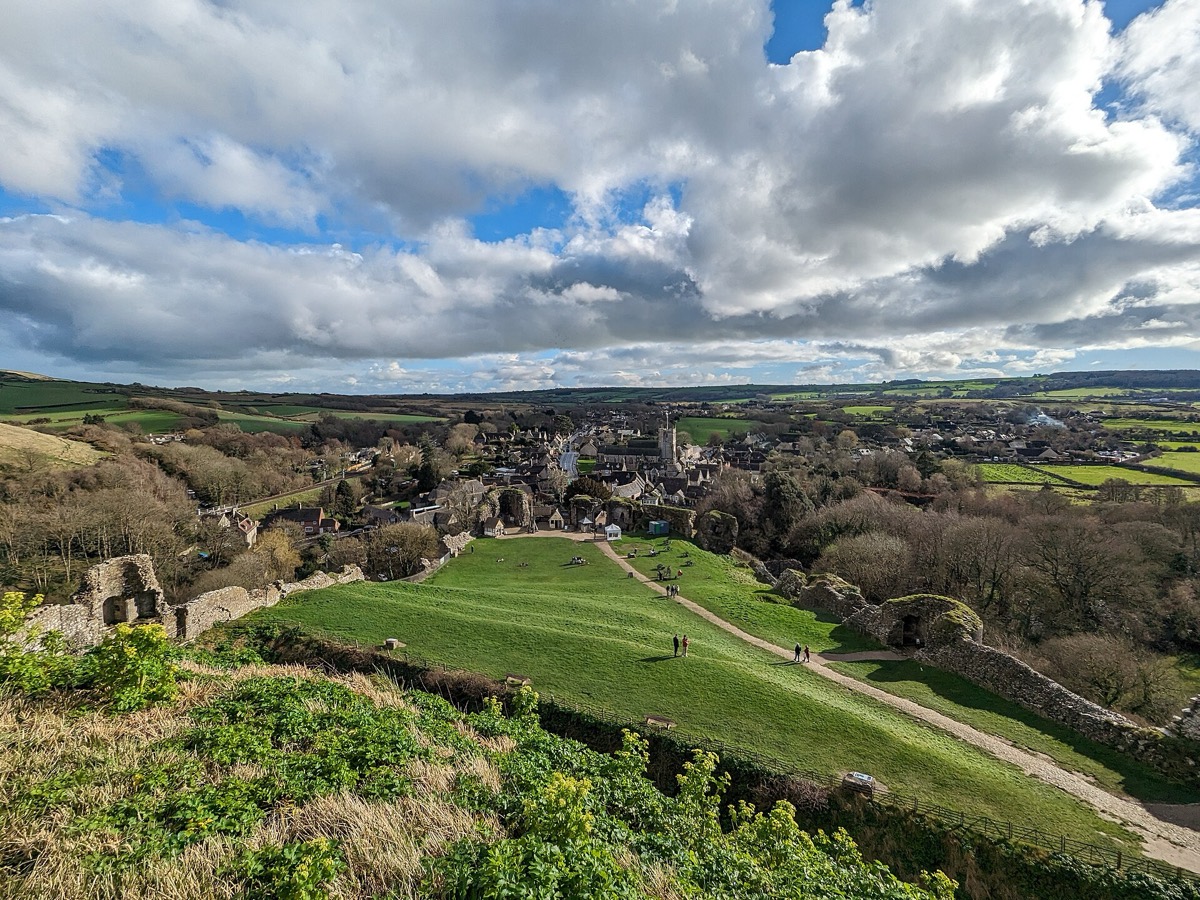
Look into the church of St Edward, King and Martyr, and walk West Street and East Street for their stone cottages, tea rooms and pubs. The Greyhound Inn below the castle is a famous spot for lunch with a view. Corfe Castle station is on the Swanage Railway, where heritage steam trains run to Swanage.
Gardens, Countryside & Antiques near Corfe Castle
The Jurassic Coast and the South West Coast Path are a short drive away: Old Harry Rocks, Studland and Durdle Door are all classic walks. Abbotsbury Swannery is further west along the coast.
For paint lovers, the Farrow & Ball Visitor Centre is at Wimborne, near Kingston Lacy, the Bankes family's grand house and gardens. Poundbury Gardens near Dorchester is a good garden centre.
Corfe Castle Through the Seasons
Spring brings wildflowers to the Purbeck Hills and clear views to the sea. Summer is busy, so visit the castle early or late and take the steam train to the beach. Autumn mornings often bring mist around the castle, and winter is quiet, with the ruin at its most atmospheric against a low sun.
Getting to Corfe Castle
Wareham, on the main line from London Waterloo, is about five miles away; from there, buses run to Corfe. The heritage Swanage Railway also calls at Corfe Castle, with a park-and-ride at Norden.
Corfe Castle: Questions & Answers
Why is Corfe Castle a ruin?
After Lady Mary Bankes held it through two Civil War sieges, the castle fell to Parliament, which ordered it slighted, blown apart, in March 1646.
Who owns Corfe Castle?
The National Trust. Ralph Bankes bequeathed the castle, much of the village and Kingston Lacy to the Trust.
Our Advice
Our advice: Climb the hill opposite the castle for the classic view first, then explore the ruin, and come back at dusk for the light. Stay a night if you can: the village is magical once the day visitors leave.
Facts checked October 2026. Sources: Wikipedia: Corfe Castle · Wikipedia: Corfe Castle (village) · nationaltrust.org.uk · swanagerailway.co.uk. Opening times and prices change, so please check before you travel.