Villages & Towns · Wiltshire
Castle Combe, Wiltshire: History of the Prettiest Village in England & Things to Do
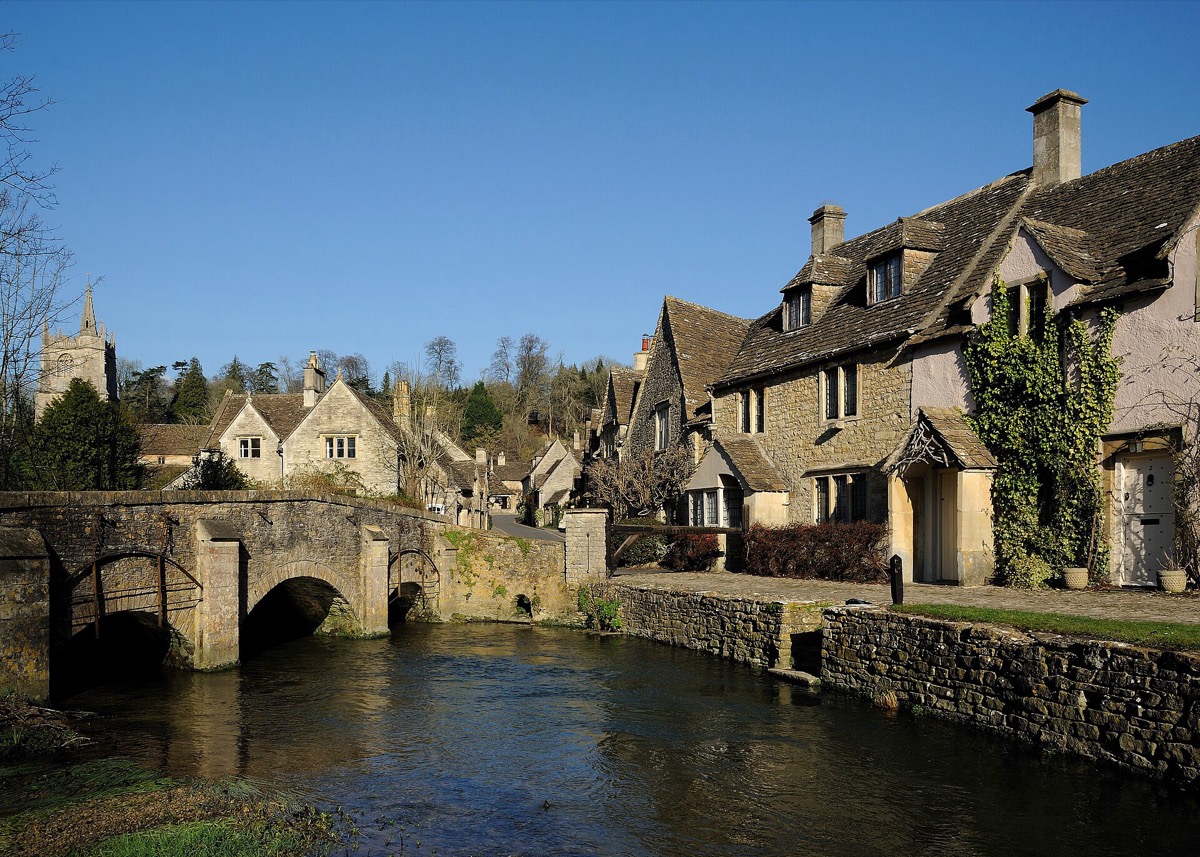
Castle Combe lies in the steep wooded valley of the By Brook, at the southern edge of the Cotswolds in Wiltshire. Its cottages of honey-coloured Cotswold stone, the old market cross and the little bridge over the stream make up one of the most photographed views in the country.
Why Castle Combe Is Special
No new houses have been built in the historic centre since about 1600, and that is the secret of Castle Combe. There are no modern buildings, few signs and little traffic in the lower village, so it has been described as "the prettiest village in England".
It is small, so a visit can be short, but it rewards a slow walk through the valley and a stop at one of its historic inns.
The History of Castle Combe
People have lived around Castle Combe for thousands of years. Neolithic flint tools and Iron Age brooches have been found nearby, and the remains of a Roman villa, with a bath house and 4th-century corn drying ovens, have been excavated several times since 1852.
The Domesday Book of 1086 records 33 households here. The village takes its name from a 12th-century castle that stood about a third of a mile to the north; today only earthworks and some masonry remain. In the 14th century the seat of the barony moved down to the Manor House in the village, and a deer park was created beside the old castle.
Wool made Castle Combe rich. By 1340 there was a fulling mill on the By Brook, and when the right to hold a weekly market was granted, the 14th-century market cross was put up where the three main streets meet; the small stone steps nearby helped riders to mount and dismount. In the 15th century the manor belonged to Millicent, wife first of Sir Stephen Le Scrope and then of Sir John Fastolf, who was effectively lord of the manor for fifty years.
The cloth trade left the area in the 17th century, and the population fell, but that decline is what preserved the village so perfectly. The Scrope family owned Castle Combe for over five centuries, until 1866. The parish church of St Andrew is Grade I listed, and the Dower House, from the late 17th century, is one of the finest of its old houses. The Manor House, built in the 17th century and rebuilt in the 19th, is now a hotel.
Film crews love it. Castle Combe was a location for the musical Doctor Dolittle (1967), and more recently for Stardust, The Wolfman and Steven Spielberg's War Horse.
Things to Do in Castle Combe
Walk from the car park down into the village (about ten minutes), past the market cross to St Andrew's church, then on to the bridge over the By Brook for the classic view of the cottages.
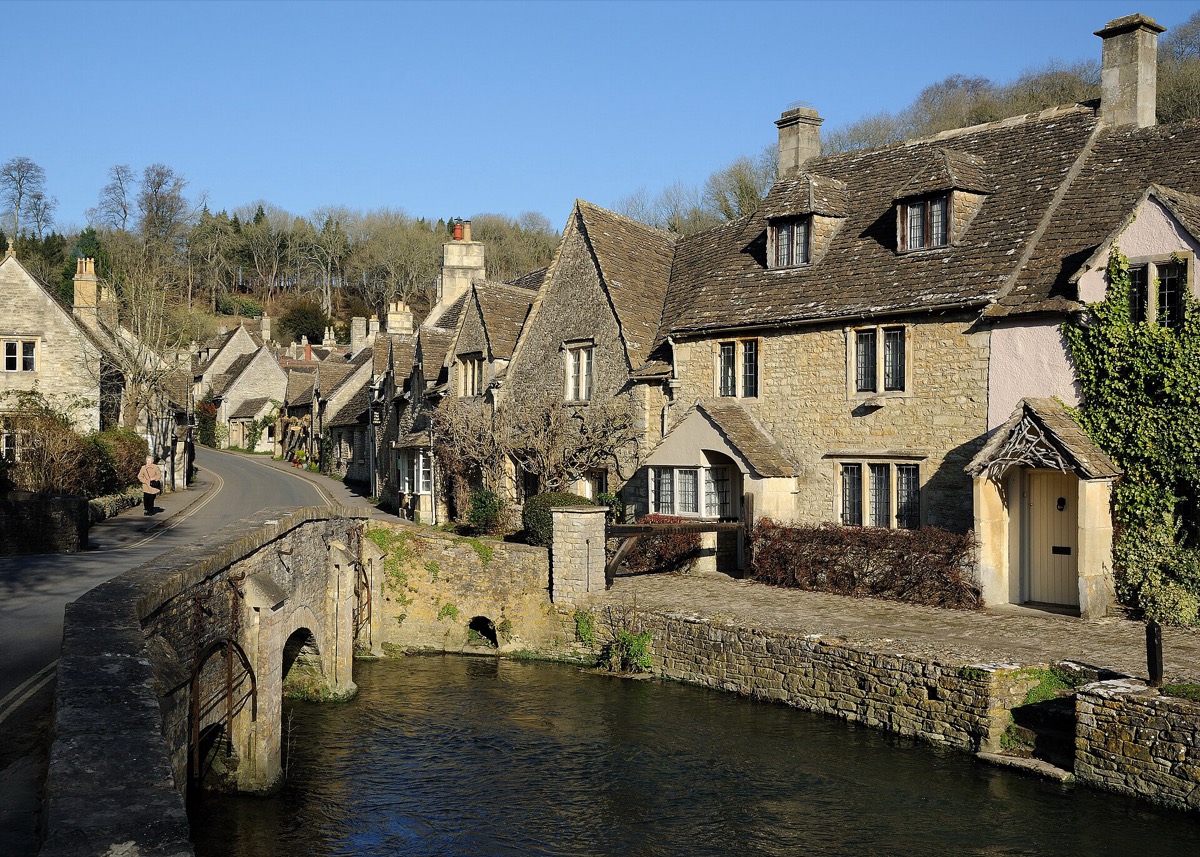
Continue along the stream to see more of the old cottages, and take one of the footpaths up the valley sides through the woods. Stop at one of the village inns or a tea room on the way back.
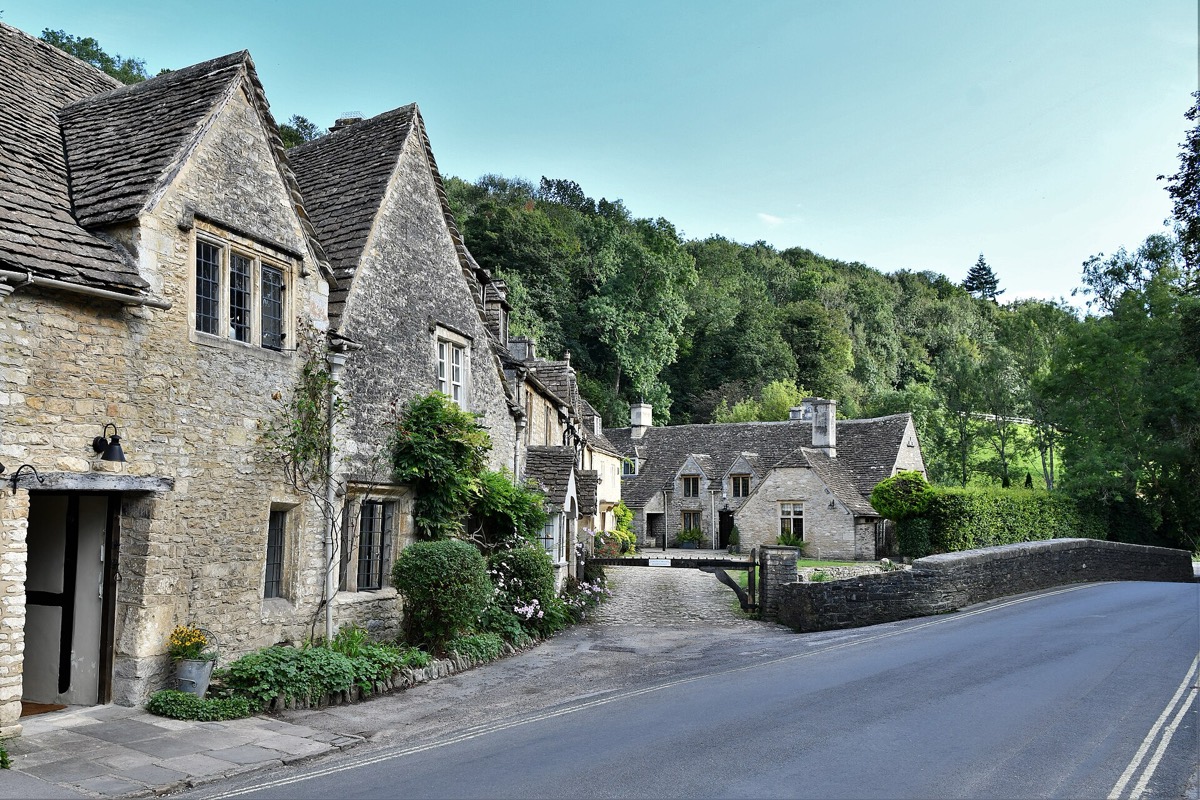
Gardens, Countryside & Antiques near Castle Combe
Lacock is about twenty minutes away, so it is easy to see both villages in a day; see our Lacock guide. Westonbirt, The National Arboretum is a short drive north, near Tetbury, a town of antiques: see our Tetbury antiques listing and Woodcock and Cavendish.
The wider Cotswolds National Landscape and the Cotswold Way are on your doorstep, and Bath is about half an hour south.
Castle Combe Through the Seasons
Spring brings wildflowers and fresh green to the valley. Summer is the busiest season, so come early in the morning. Autumn colours the beech woods around the village beautifully, and on a frosty winter morning the empty streets are pure magic.
Getting to Castle Combe
The nearest railway station is Chippenham, about six miles away. Drivers should use the car park in the upper village and walk down, as parking in the village centre is very limited.
Castle Combe: Questions & Answers
Why is Castle Combe called the prettiest village in England?
No new houses have been built in its historic centre since about 1600, so its Cotswold stone cottages, market cross and bridge over the By Brook are almost unchanged.
Where do you park in Castle Combe?
Use the car park in the upper village and walk down; parking in the village centre is very limited.
Our Advice
Our advice: Come early in the morning or late in the afternoon, walk down from the car park, and combine Castle Combe with Lacock and Westonbirt for a perfect Cotswold day.
Facts checked October 2026. Sources: Wikipedia: Castle Combe · historicengland.org.uk · visitwiltshire.co.uk. Opening times and prices change, so please check before you travel.