Beauty Spots · Dorset & Devon
The Jurassic Coast: Durdle Door, Lulworth, Lyme Regis & the Best Walks
The Jurassic Coast runs for 96 miles from Orcombe Point near Exmouth in East Devon to Old Harry Rocks near Swanage in Dorset. Its cliffs, coves and arches form an almost continuous record of the Triassic, Jurassic and Cretaceous periods, and in December 2001 it became England's first natural World Heritage Site.
Why The Jurassic Coast Is Special
Walking the Jurassic Coast is like walking through time: the red cliffs of East Devon are about 250 million years old, while the white chalk of Old Harry Rocks was laid down about 65 million years ago. Together they span 185 million years of geological history.
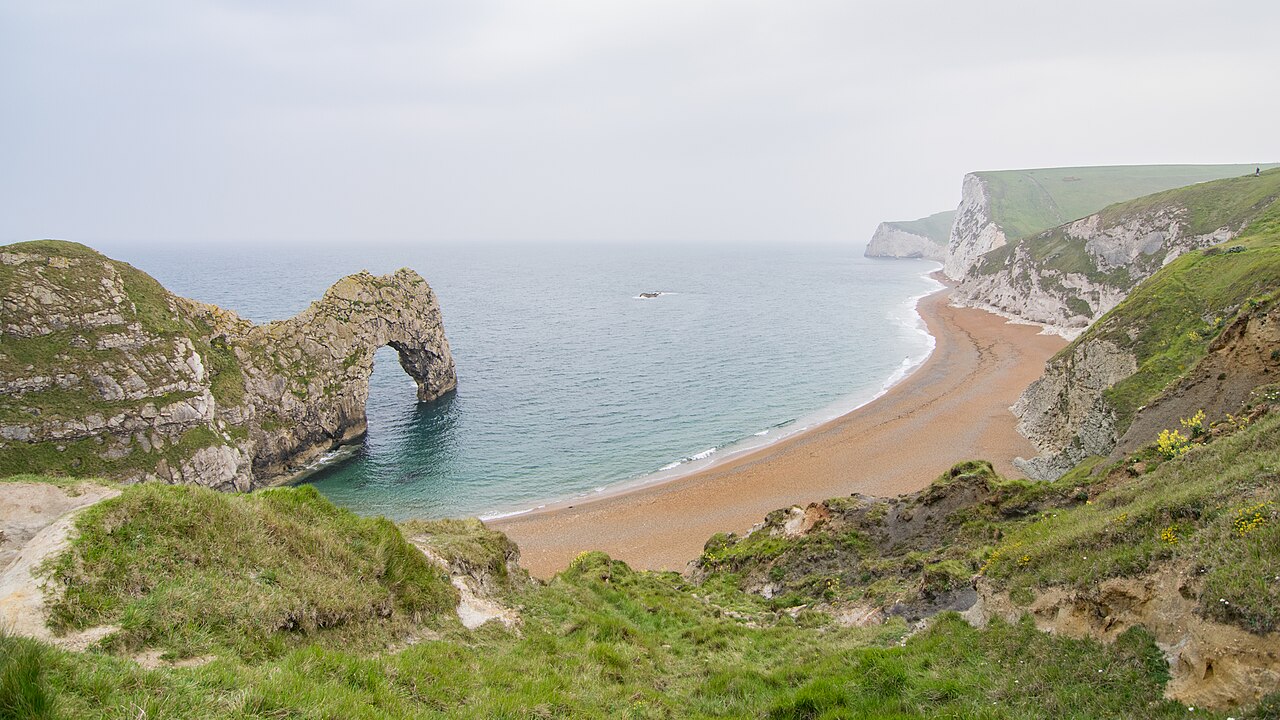
It is also simply one of the most beautiful coastlines in Britain, with the arch of Durdle Door, the perfect shell of Lulworth Cove and the great shingle bank of Chesil Beach.
The History of The Jurassic Coast
Erosion by the sea keeps exposing new rocks and fossils, and this coast has been central to the science of palaeontology. The fossil collector Mary Anning lived at Lyme Regis, and her major discoveries of marine reptiles, including ichthyosaurs and plesiosaurs, were made at a time when the study of fossils was just beginning.
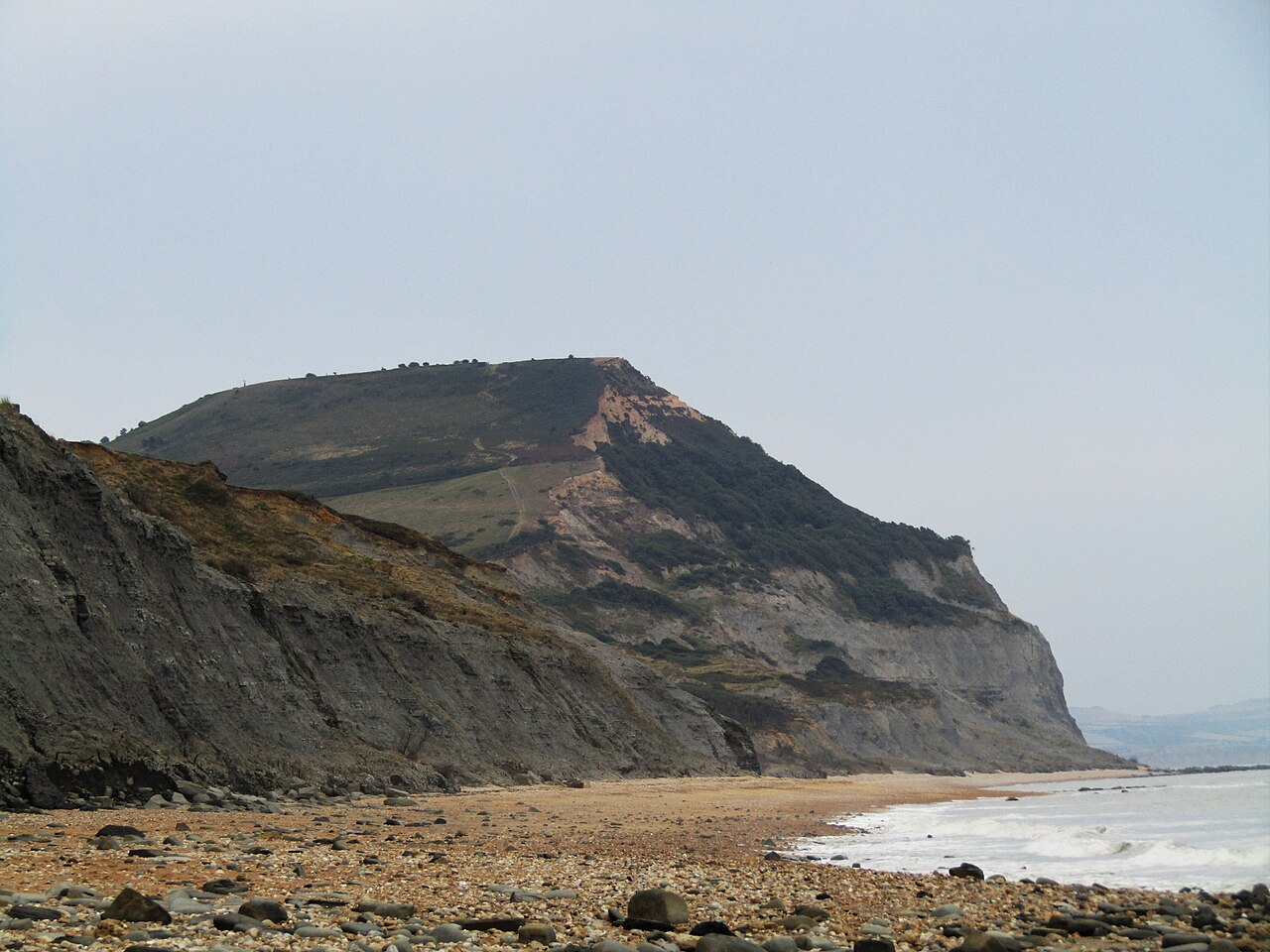
Golden Cap, between Charmouth and Seatown, is the highest point on the south coast of England, its summit capped with golden sandstone. Further east, Chesil Beach is a great bank of shingle running for about 18 miles to the Isle of Portland, enclosing the lagoon of the Fleet.
At Lulworth, the sea has broken through a band of hard limestone and scooped out the soft rocks behind to form the almost circular Lulworth Cove. Nearby Durdle Door is a natural limestone arch reaching out into the sea, one of the most photographed places in Britain.
What to See & the Best Walks at The Jurassic Coast
Walk the coast path from Lulworth Cove over the cliffs to Durdle Door and back. Hunt for fossils on the beaches at Charmouth and Lyme Regis, ideally after a storm and on a falling tide, and walk out along the Cobb at Lyme.
Climb Golden Cap for a view along the whole coast, see Chesil Beach from the Abbotsbury hills, and walk from Studland to Old Harry Rocks at the eastern end.
Wildlife at The Jurassic Coast
The coast is rich in wild flowers, butterflies and seabirds, and the Fleet lagoon behind Chesil Beach is home to the swans of Abbotsbury Swannery. When fossil hunting, stay away from the cliffs, which can fall at any time, and collect only loose fossils from the beach.
Gardens, Countryside & Antiques near The Jurassic Coast
See the Jurassic Coast listing and walk the South West Coast Path, which follows the whole coast. Gardeners can visit Poundbury Gardens near Dorchester.
Corfe Castle is close to the eastern end; see our guide to Corfe Castle, and Shaftesbury's Gold Hill is inland; see Shaftesbury.
The Jurassic Coast Through the Seasons
Spring brings wild flowers to the clifftops. Summer is busy, so walk early to Durdle Door. Autumn and winter storms bring down fresh fossils, making it the best season for fossil hunting.
Getting to The Jurassic Coast
Trains run to Exeter, Axminster, Weymouth and Wareham, with the coastal Jurassic Coaster bus along much of the coast. Car parks at Lulworth fill early in summer.
The Jurassic Coast: Questions & Answers
How long is the Jurassic Coast?
About 96 miles, from Orcombe Point near Exmouth to Old Harry Rocks near Swanage. It became a World Heritage Site in 2001.
Where is the best fossil hunting on the Jurassic Coast?
Charmouth and Lyme Regis are the best-known beaches. Go on a falling tide, keep away from the cliffs and collect only loose fossils.
Our Advice
Our advice: Walk from Lulworth Cove to Durdle Door first thing in the morning, then drive west to Charmouth for an afternoon of fossil hunting on a falling tide.
Facts checked October 2026. Sources: Wikipedia: Jurassic Coast · jurassiccoast.org · whc.unesco.org. Opening times and prices change, so please check before you travel.