Beauty Spots · East Sussex
Beachy Head, Birling Gap & the Seven Sisters: Cliffs, Lighthouses & Walks
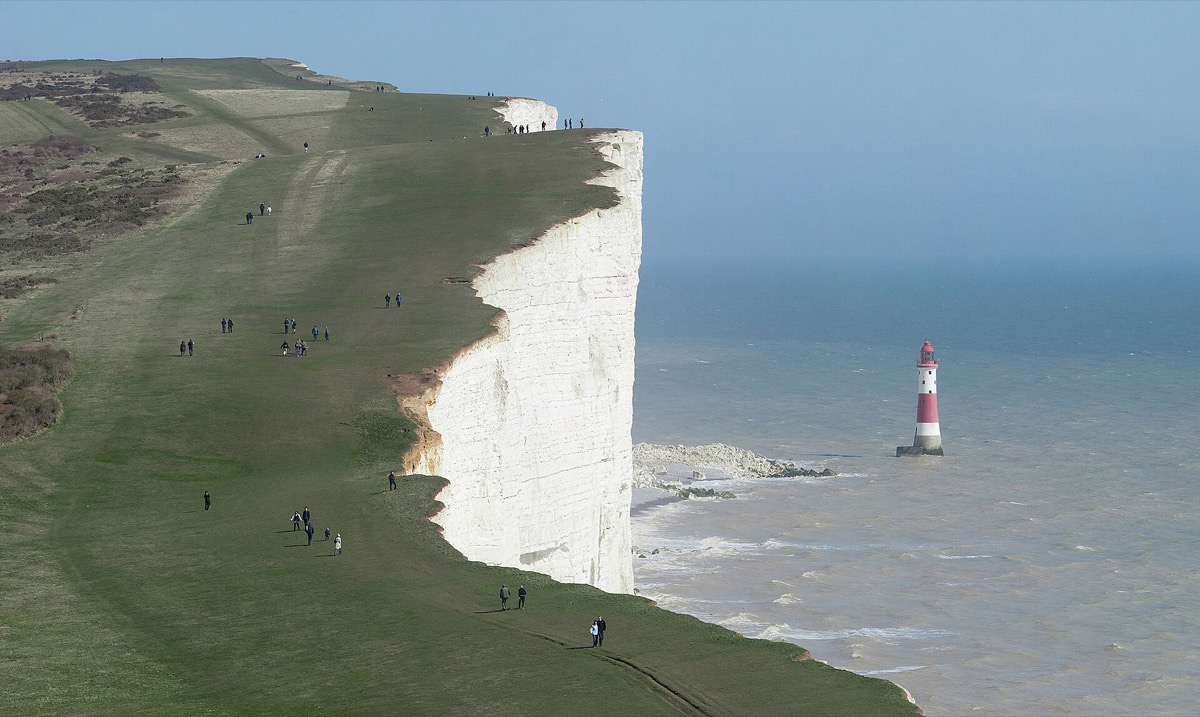
Beachy Head is the great chalk headland just west of Eastbourne, where the South Downs end in a sheer white wall above the sea. At 162 metres (531 feet) it is the highest chalk sea cliff in Britain, and from its top the cliffs of the Seven Sisters roll away westward past Birling Gap to the Cuckmere.
Why Beachy Head & Birling Gap Is Special
This is one of the most famous coastlines in the world: dazzling white cliffs, a red-and-white lighthouse far below on the shore, an old lighthouse on the clifftop and the green Downs running right to the edge.
It is all part of the South Downs National Park, and much of the land is protected by the National Trust and Eastbourne Borough Council, so you can walk for miles along the clifftops.
The History of Beachy Head & Birling Gap
The chalk was laid down in the sea in the Late Cretaceous, between 66 and 100 million years ago, then uplifted; when the last ice age ended and the English Channel formed, the sea cut into the chalk to make these cliffs. The cliffs are still eroding: in 2001 a collapse destroyed a famous chalk stack called the Devil's Chimney.
The name has nothing to do with beaches. It appears as Beauchef in 1274 and Beaucheif by 1317, from the French for "beautiful headland", and was regularly called Beachy Head by 1724. In 1929 Eastbourne Borough Council bought 4,000 acres around the headland to save it from development.
So many ships were wrecked here that a lighthouse was petitioned for as early as 1691. John "Mad Jack" Fuller, MP for Sussex, helped pay for one: a temporary wooden light began in 1828, and the granite Belle Tout lighthouse, designed by Thomas Stevenson, came into service on 11 October 1834. But its light was often hidden by sea mist, so between 1900 and 1902 Trinity House built the Beachy Head Lighthouse on the shore about 165 metres out from the foot of the cliffs. It is 33 metres tall, became operational in October 1902, and was the last wave-washed masonry lighthouse Trinity House built.
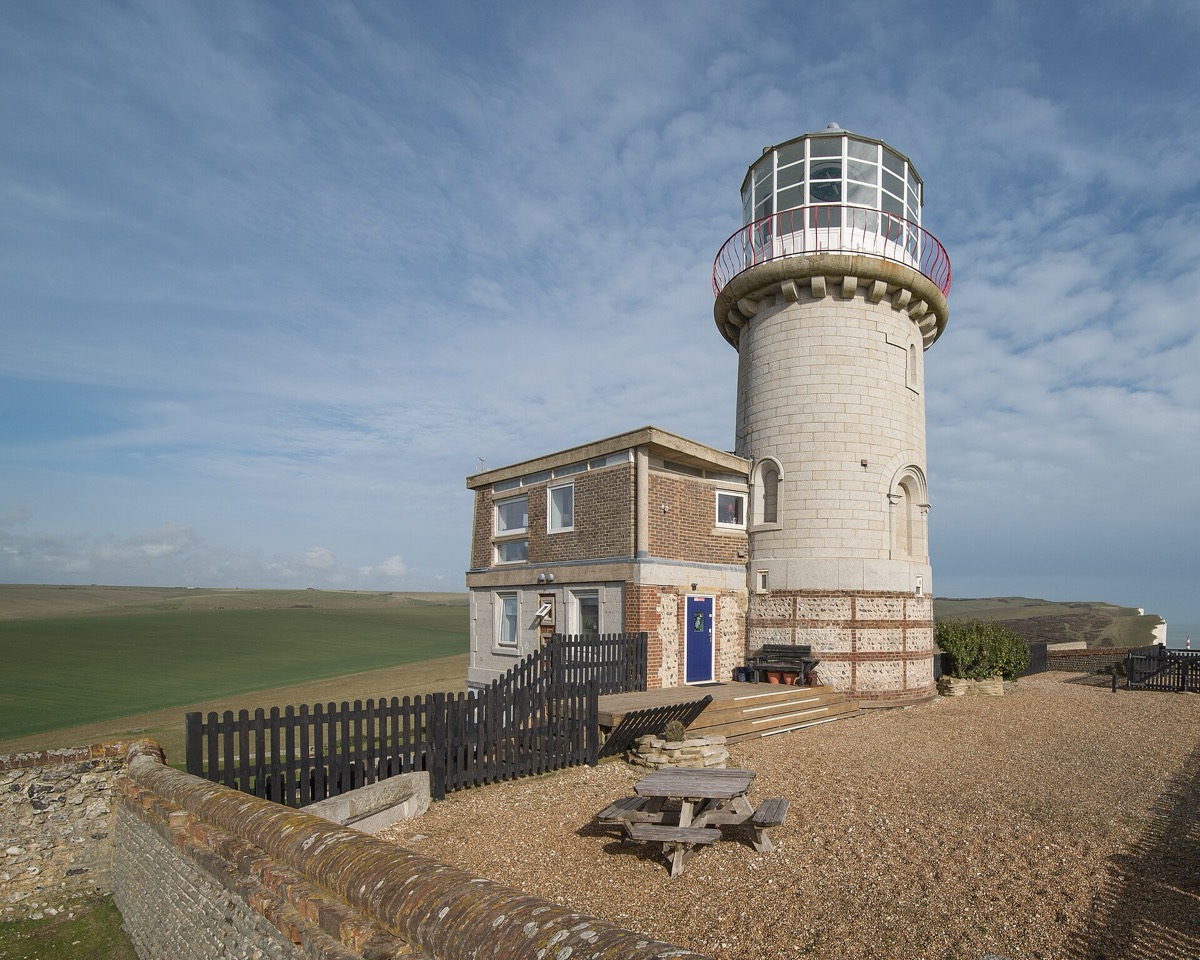
Belle Tout was decommissioned in 1902. By 1999 the cliff edge was threatening its foundations, and on 17 March 1999 the whole lighthouse was moved 17 metres back from the edge in one piece. It has been called Britain's most famous inhabited lighthouse.
To the west, the Seven Sisters are a run of chalk cliffs between Cuckmere Haven and Beachy Head; the dips between the crests are old dry valleys of the Downs, cut through by the sea. In 1926 plans emerged for a new town on the clifftops, one of the threats that led to the land being protected. Birling Gap, between the two, is a hamlet owned by the National Trust.
What to See & the Best Walks at Beachy Head & Birling Gap
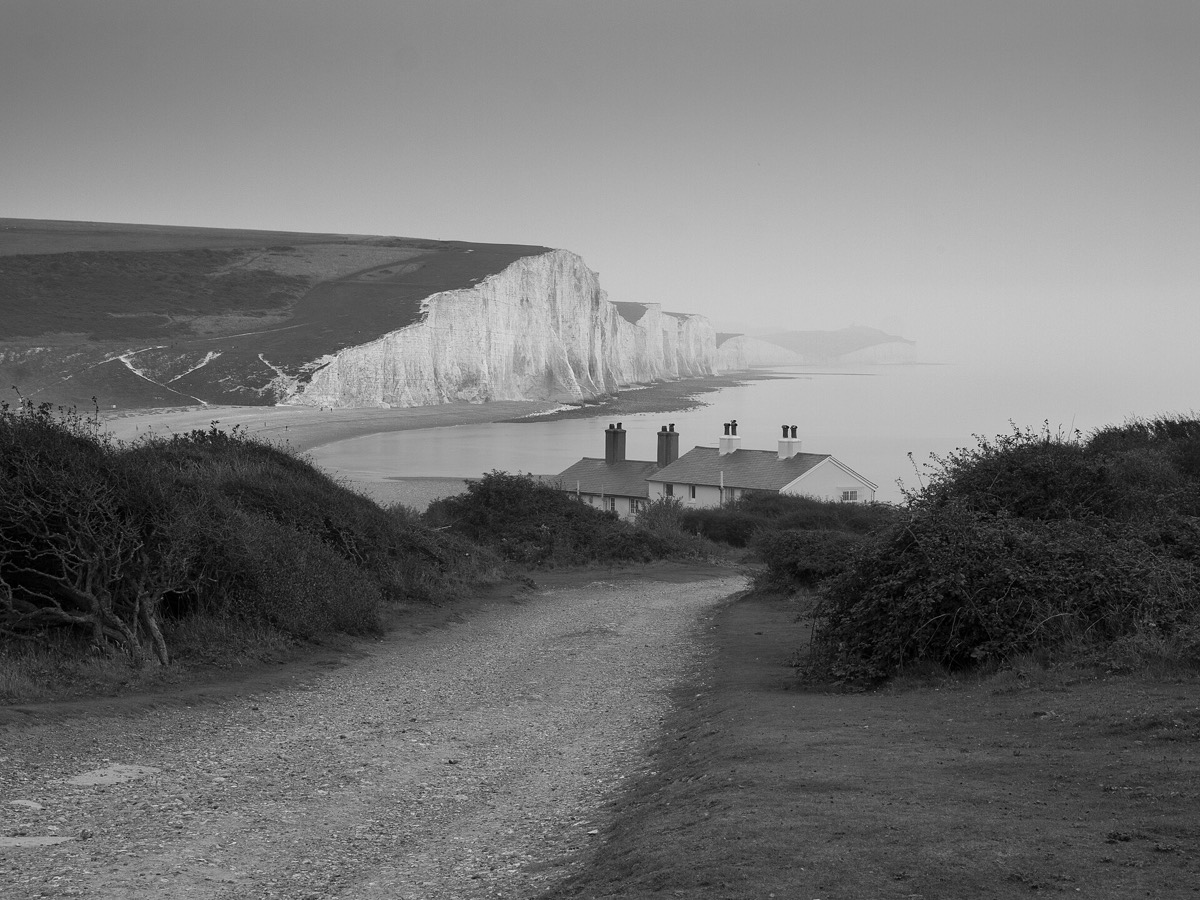
Walk from Beachy Head west along the clifftop past Belle Tout to Birling Gap, where the National Trust has a café and, when they are open, steps down to the beach below the Seven Sisters; at low tide you can explore the rock pools. Continue over the Seven Sisters to Cuckmere Haven for the classic view of the cliffs and the coastguard cottages.
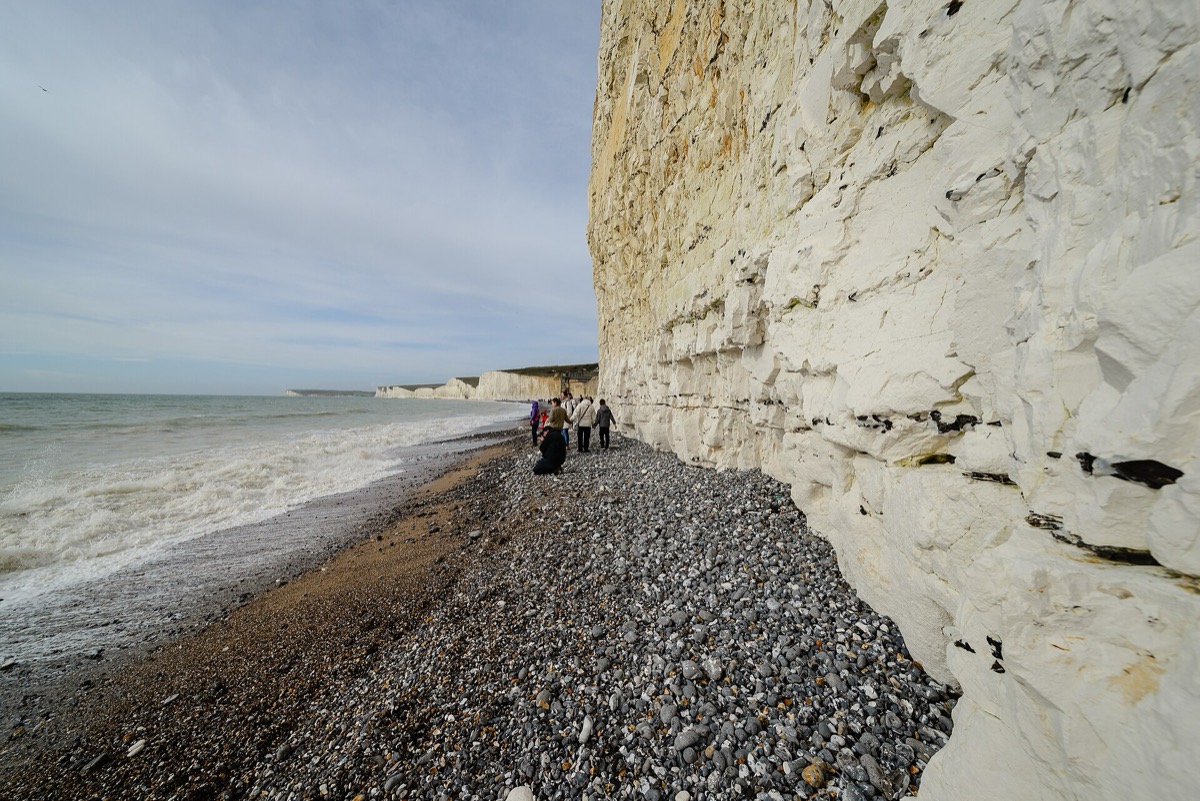
The South Downs Way begins and ends in Eastbourne and runs over Beachy Head. Please keep well back from the cliff edge: the chalk is undercut and collapses without warning, and the same is true of the cliff foot after rough weather.
Wildlife at Beachy Head & Birling Gap
Beachy Head is one of the best places in Britain to watch bird migration, especially in spring and autumn, when warblers, chats and birds of prey pass along the coast. The chalk grassland on the clifftops is rich in wild flowers and butterflies in summer.
Gardens, Countryside & Antiques near Beachy Head & Birling Gap
See our listing for Seven Sisters and Birling Gap, our guide to the South Downs and the South Downs National Park. Alfriston, in the Cuckmere Valley, is the perfect village for lunch; see our Alfriston guide.
Families will love Drusillas Park, and the Downland Landmarks guide covers the Long Man of Wilmington, a short drive inland.
Beachy Head & Birling Gap Through the Seasons
Spring and autumn are the best seasons for migrating birds and clear views. Summer brings wild flowers and butterflies to the clifftops, and long evenings on the cliffs. In winter, choose a calm, bright day: the wind on the headland can be fierce.
Getting to Beachy Head & Birling Gap
Eastbourne station is about three miles from Beachy Head; in summer an open-top bus runs from Eastbourne over the Downs. There are car parks at Beachy Head and Birling Gap.
Beachy Head & Birling Gap: Questions & Answers
How high is Beachy Head?
Beachy Head rises to 162 metres (531 feet), the highest chalk sea cliff in Britain.
Why was Belle Tout lighthouse moved?
Cliff erosion was threatening its foundations, so on 17 March 1999 the whole lighthouse was moved 17 metres back from the edge in one piece.
Our Advice
Our advice: Walk the clifftop from Beachy Head to Birling Gap, about three miles, and catch the bus or walk back; go on a clear morning, and always keep well back from the edge.
Facts checked October 2026. Sources: Wikipedia: Beachy Head · Wikipedia: Belle Tout Lighthouse · Wikipedia: Beachy Head Lighthouse · Wikipedia: Seven Sisters, Sussex · nationaltrust.org.uk. Opening times and prices change, so please check before you travel.