Villages & Towns · East Sussex
Alfriston, East Sussex: History, the Clergy House & Things to Do
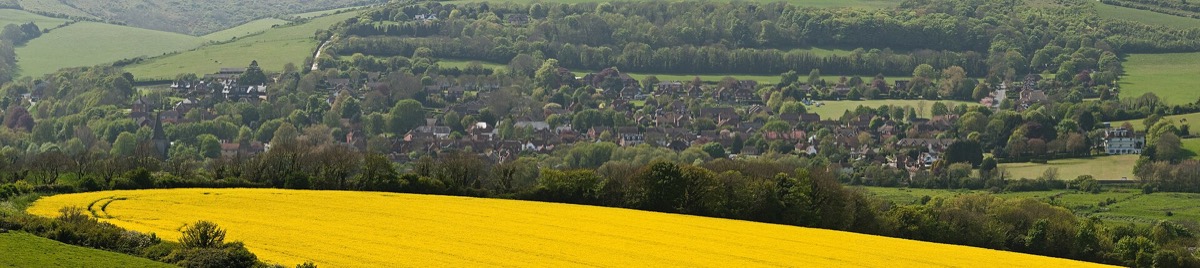
Alfriston lies in the valley of the River Cuckmere, about four miles north-east of Seaford, folded into the chalk of the South Downs. It is a village of flint walls, old inns and tile-hung cottages, with a single winding High Street, a little market square and a great church standing on a green beside the river.
Why Alfriston Is Special
Few villages in the South pack so much history into so small a space. In one short walk you pass a medieval market cross, smugglers' inns and the very first building the National Trust ever bought.
It is also a wonderful base for the countryside. The South Downs Way crosses the Cuckmere here, and within a few miles you reach some of the most celebrated views in England, from the white cliffs of the Seven Sisters to the meanders of the river winding down to the sea.
The History of Alfriston
The name Alfriston first appears in the Domesday Book of 1086 as Alvricestone, a settlement of nine households. By around 1150 a French document records it as Alfrichestuna, and through the medieval period it was commonly known as a market town.
The parish church of St Andrew has Saxon origins, although most of the building dates from the 14th century. Built in the shape of a cross on a raised green called the Tye, it is often called the "Cathedral of the Downs" for its size and setting.
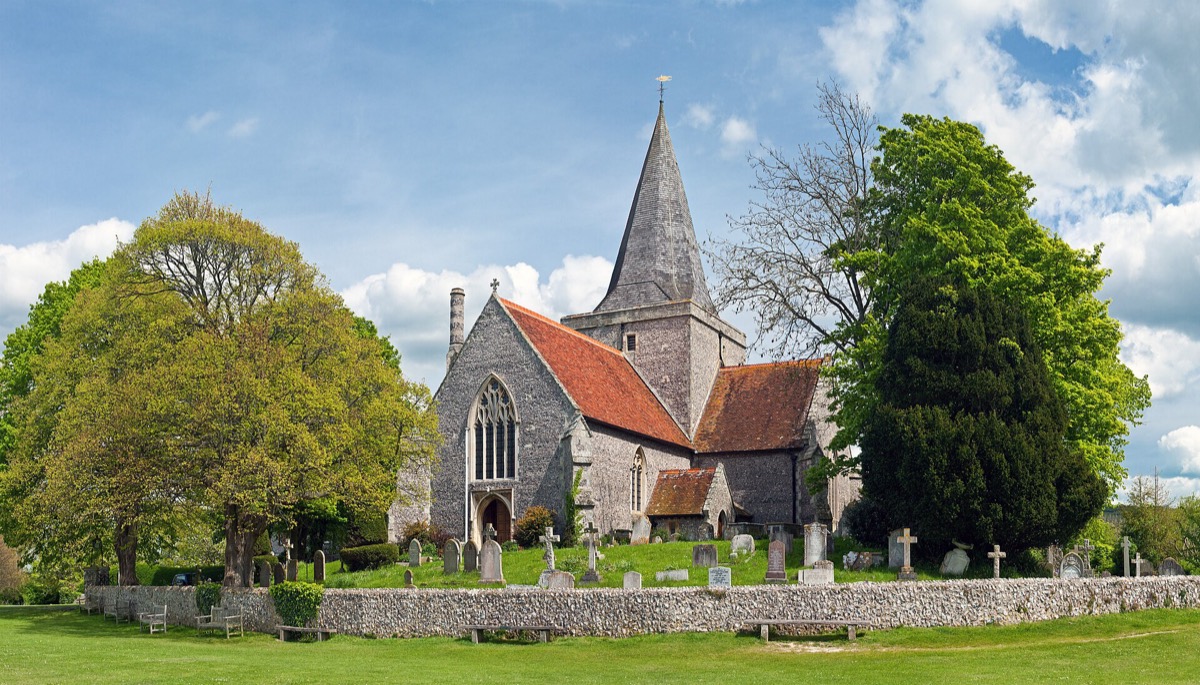
Beside it stands the Alfriston Clergy House, a 14th-century Wealden hall house with a thatched roof and timber-framed walls. Originally a farmhouse and later the vicarage, it was the very first property bought by the National Trust, in 1896, and it remains a place of pilgrimage for anyone who loves old buildings.
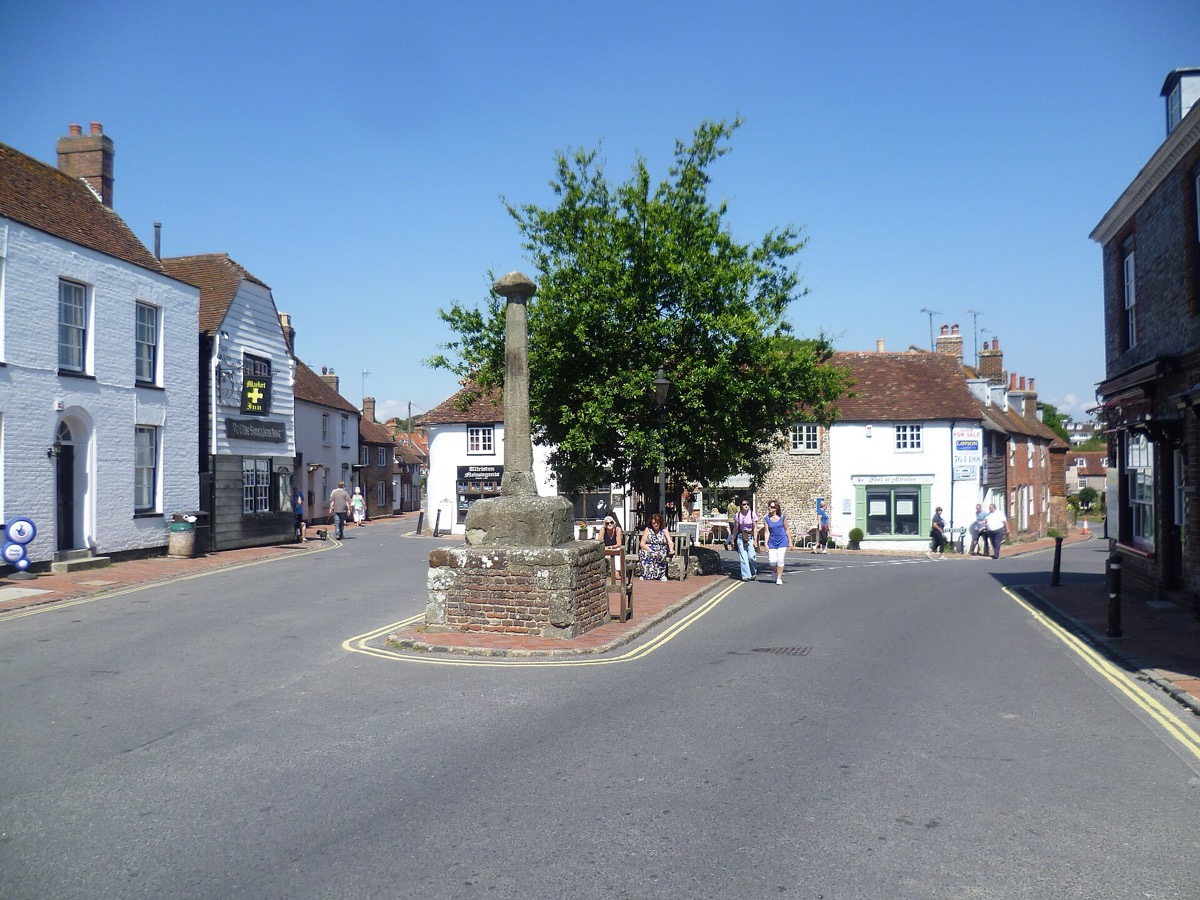
The Star Inn began life in 1345 as a religious hostel for monks and pilgrims travelling from Battle Abbey to the shrine of St Richard at Chichester Cathedral, and became an inn in the 16th century. Other inns were connected with the Alfriston smuggling gang, whose leader was transported to Australia in 1830. The centre of the village is the Market Square, with its 15th-century market cross.
The village has inspired writers and film-makers too. Eleanor Farjeon wrote the hymn "Morning Has Broken" in Alfriston in 1931, and the 1964 film The Chalk Garden, with Deborah Kerr and Hayley Mills, was filmed in and around the village. Later residents have included the politician Denis Healey and his wife, the author Edna Healey, and the children's author Jacqueline Wilson lives here today.
Things to Do in Alfriston
Walk down to the Tye to see St Andrew's and the Clergy House together; the Clergy House has a pretty cottage garden and is cared for by the National Trust (check opening days). Then wander the High Street for its old inns, bookshop, tea rooms and independent shops, and stand by the market cross in the square.
Cross the white bridge over the Cuckmere for a riverside walk, or climb up onto the Downs for a view back over the village roofs and the church spire.
Gardens, Countryside & Antiques near Alfriston
Families love Drusillas Park, the zoo on the edge of the village. Walkers can follow the Cuckmere down to Seven Sisters and Birling Gap, and the whole of the South Downs National Park surrounds you; our guide to the South Downs has the best walks.
For great gardens, Sheffield Park and Garden and Wakehurst are within an easy drive, and Lewes, the county town, is close by for antiques and independent shops.
Two miles to the north-east, the Long Man of Wilmington, one of the largest hill figures in Europe, is cut into the chalk of Windover Hill, and the High and Over viewpoint above the village looks straight down on the meanders of the Cuckmere.
Alfriston Through the Seasons
In spring the Downs are bright with cowslips and the Cuckmere water meadows are full of birds. Summer is the time for long walks on the ridge and picnics by the river. Autumn colours the beech hangers above the valley, and in winter a walk to the cliffs followed by lunch by a village fire is hard to beat.
Getting to Alfriston
The nearest railway station is Berwick, on the line between Lewes and Eastbourne, about two and a half miles away. There are car parks at both ends of the village.
Alfriston: Questions & Answers
What is Alfriston known for?
Alfriston is known for the Clergy House, the first property the National Trust ever bought (1896), St Andrew's church on the Tye, its old smugglers' inns and its position on the South Downs Way.
Is Alfriston good for walking?
Yes. The South Downs Way crosses the Cuckmere at Alfriston, and you can walk down the valley towards the Seven Sisters or up to the Long Man of Wilmington.
Our Advice
Our advice: Arrive in the morning, see the Clergy House and church first, then walk a stretch of the South Downs Way or follow the river towards the sea, and come back to the village for lunch.
Facts checked October 2026. Sources: Wikipedia: Alfriston · nationaltrust.org.uk. Opening times and prices change, so please check before you travel.