Into the Garden
Hellebores for a Shady Corner
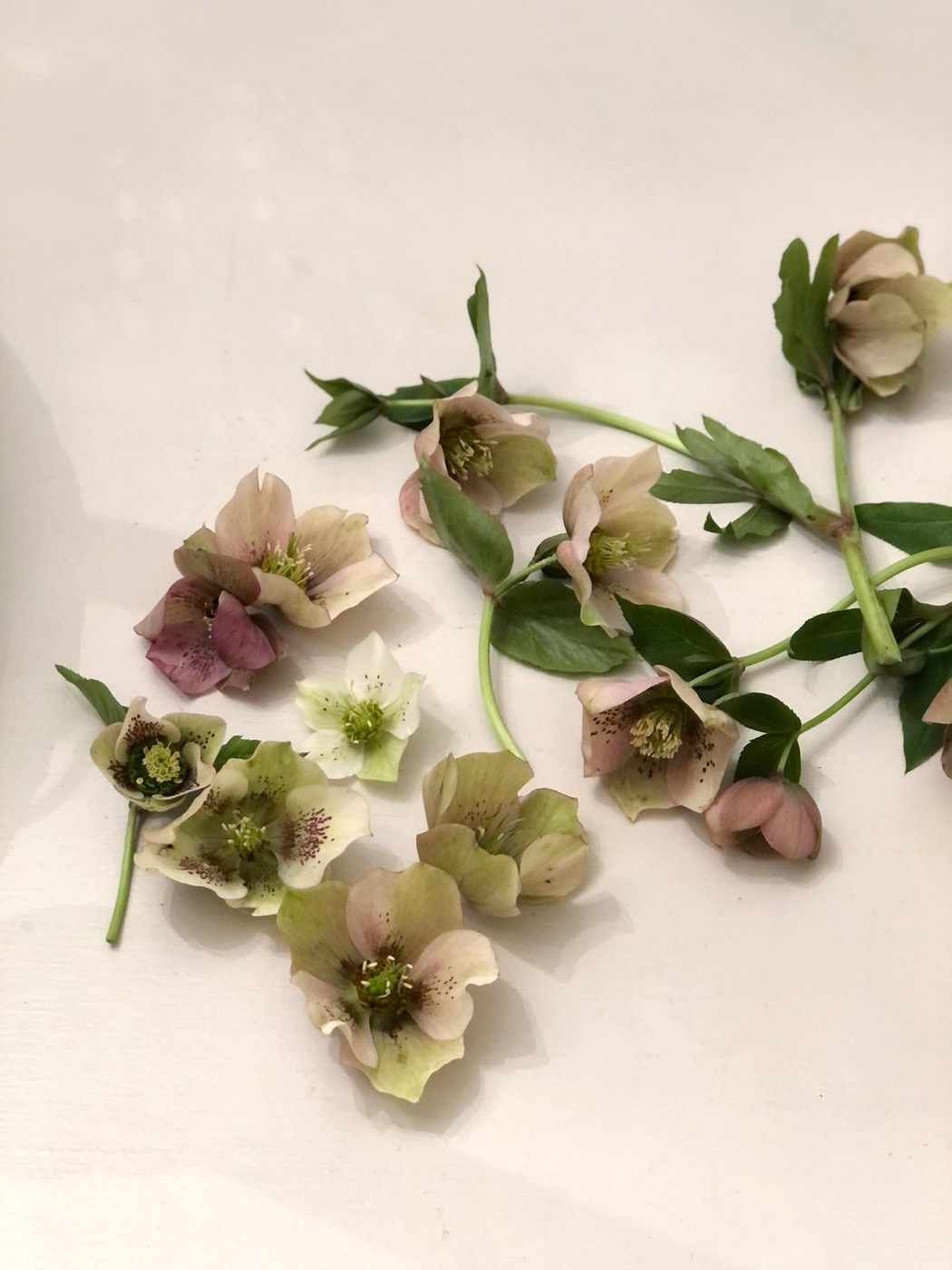
When most of the garden is still rather spare, a hellebore has the presence of a much larger plant. Its flowers hang on bent stems, and from above you may see only the backs of them. Look from below and there can be freckles, dark veins and a ring of pale stamens. That is reason enough to put one beside a step or on a gently raised border, where it is easy to get close.
Buy a plant whose flowers you can see
The Lenten rose hybrids, *Helleborus × hybridus*, are a good place to begin. The late-winter and spring flowers vary from cream and pink to deep plum, with plenty of variation between seed-grown plants. Buy one in flower if the colour matters to you. A pale, spotted flower reads well from a path. A dark one may be best where you will pause to see it.
Give these hybrids light shade and fertile soil that holds some moisture without staying wet. Beneath the edge of a deciduous shrub is a good place to try. Water a new plant during dry spells while its roots settle. A layer of garden compost over the soil around it can help retain moisture. The Christmas rose, *Helleborus niger*, needs particularly good drainage in winter, so check the label when choosing a plant.
Clear a view of the flowers
For the Lenten rose hybrids, remove the old leaves in late winter or early spring as the flowers are coming through, taking care to keep the new growth and flower stems. That gives you a better view and helps with leaf spot. Other hellebore types need different treatment. Check which one you have before removing a whole plant’s foliage.
If your own garden has flowers to spare, my crystal-bowl arrangement is an idea worth returning to. A shallow bowl lets you look down on the markings that were tucked out of sight outdoors. Leave a little room around each flower head. The bowl can be quite small and the pleasure is in seeing each bloom clearly.
More from me: My Art of Display feature