Beauty Spots · Isle of Wight
The Isle of Wight & the Needles: Chalk Cliffs, History & the Best Walks
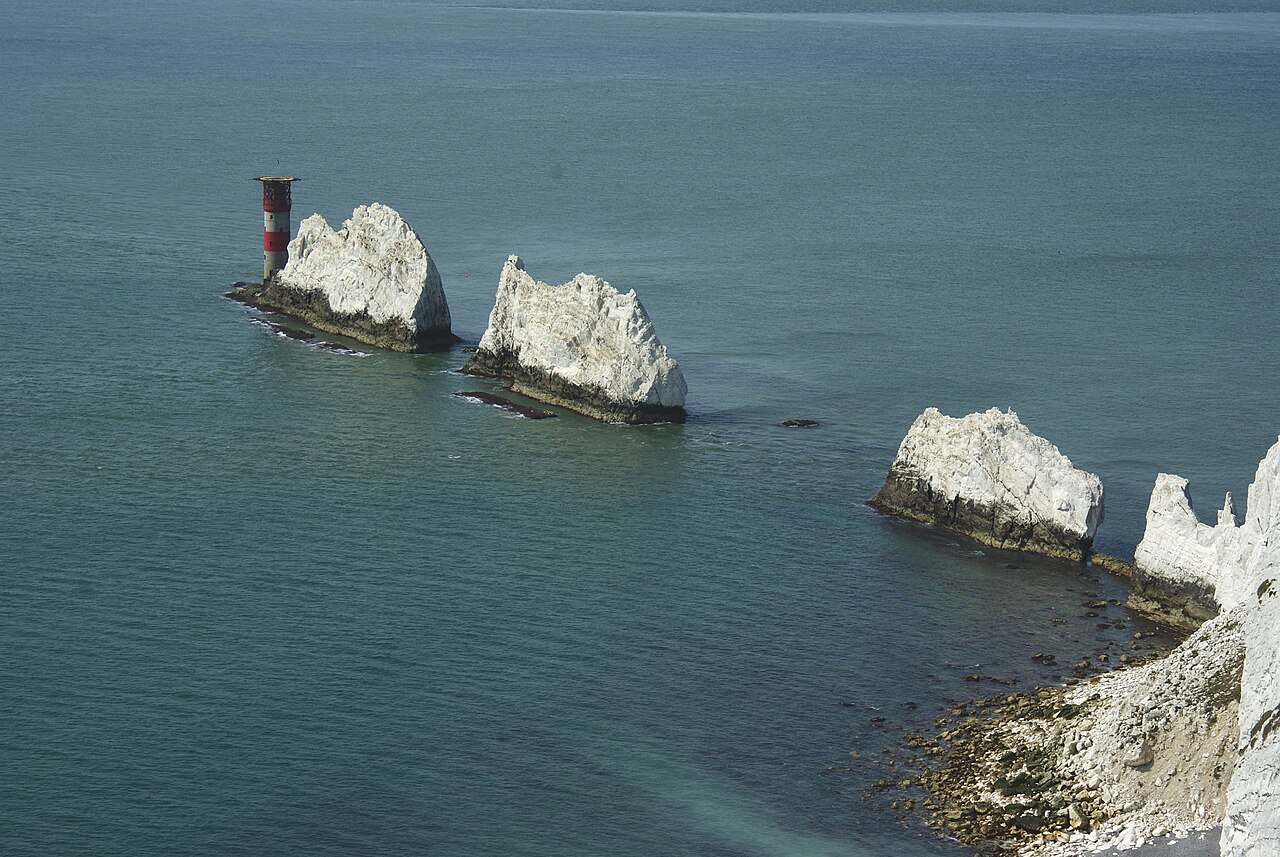
The Isle of Wight lies off the Hampshire coast across the Solent, a short ferry ride from Lymington, Southampton and Portsmouth. At its western tip a long chalk ridge ends in the Needles, a row of three white stacks rising out of the sea.
Why The Isle of Wight & the Needles Is Special
The Needles are one of the most famous sights of the English coast, and the walk to them over the high chalk downs is one of the finest in the South.
Much of the island is protected as the Isle of Wight National Landscape, and its mix of downs, cliffs, sandy bays and thatched villages has drawn visitors since Victorian times.
The History of The Isle of Wight & the Needles
The Needles are three chalk stacks that rise about 30 metres out of the sea. They take their name from a fourth, needle-shaped stack called Lot's Wife, about 37 metres high, which collapsed in 1764.
The Needles Lighthouse at the end of the stacks was built in 1859 and has been automated since 1994. On the cliff above, the Needles Old Battery, a Victorian fort built against the threat of invasion, is cared for by the National Trust.
The island was a favourite of Queen Victoria, who made Osborne House her family home and died there in 1901, and of the poet Alfred, Lord Tennyson, who lived at Farringford and walked the down above the Needles that now bears his name.
What to See & the Best Walks at The Isle of Wight & the Needles
Walk from Freshwater Bay over Tennyson Down to the Needles, then visit the Old Battery for the view down onto the stacks (check opening times). See the coloured sand cliffs at Alum Bay, and take the chairlift down to the beach.
Visit Osborne, Queen Victoria's seaside home, and the thatched village of Godshill, and walk a stretch of the coast path around the island.
Wildlife at The Isle of Wight & the Needles
The chalk downs are rich in wild flowers and butterflies, and the island is one of the last strongholds of the red squirrel in southern England. Please keep well away from the cliff edges, which can crumble.
Gardens, Countryside & Antiques near The Isle of Wight & the Needles
See the Isle of Wight National Landscape listing. Lymington, with its ferry to Yarmouth, is our nearest guide on the mainland; see Lymington and Beaulieu.
Across the Solent, Exbury Gardens and the New Forest National Park make a perfect day before or after the crossing.
The Isle of Wight & the Needles Through the Seasons
Spring brings wild flowers to the downs. Summer is the season for beaches and sailing, with Cowes Week in August. Autumn is quieter and golden, and winter walks on the downs are bracing and beautiful.
Getting to The Isle of Wight & the Needles
Car ferries run from Lymington to Yarmouth, Southampton to East Cowes and Portsmouth to Fishbourne, with fast passenger ferries to Cowes and Ryde. Buses serve the Needles in season.
The Isle of Wight & the Needles: Questions & Answers
How did the Needles get their name?
From Lot's Wife, a fourth needle-shaped chalk stack about 37 metres high, which collapsed in 1764.
When was the Needles Lighthouse built?
In 1859. It has been automated since 1994.
Our Advice
Our advice: Cross from Lymington to Yarmouth, walk over Tennyson Down to the Needles and back, and save Osborne for a second day.
Facts checked October 2026. Sources: Wikipedia: The Needles · nationaltrust.org.uk. Opening times and prices change, so please check before you travel.