Garden & Home Directory · The Guide
Britain's Love of Heritage Paint & Wallpaper: The Makers, the Colours and How to Choose
Few countries talk about paint the way the British do. We argue over the right white for a north-facing hall, fall in love with colours called Mouse's Back and Elephant's Breath, and happily drive across a county to pick up a sample pot. Behind that passion lies a long history of colour in British houses, a handful of paint makers who have made heritage colours their life's work, and a wallpaper tradition that runs from Pugin to William Morris.
This guide tells that story, introduces the makers and where to see their work, and shares what we have learned about choosing and sampling a colour, with links throughout to the paint and wallpaper showrooms and stockists we have checked in every region.
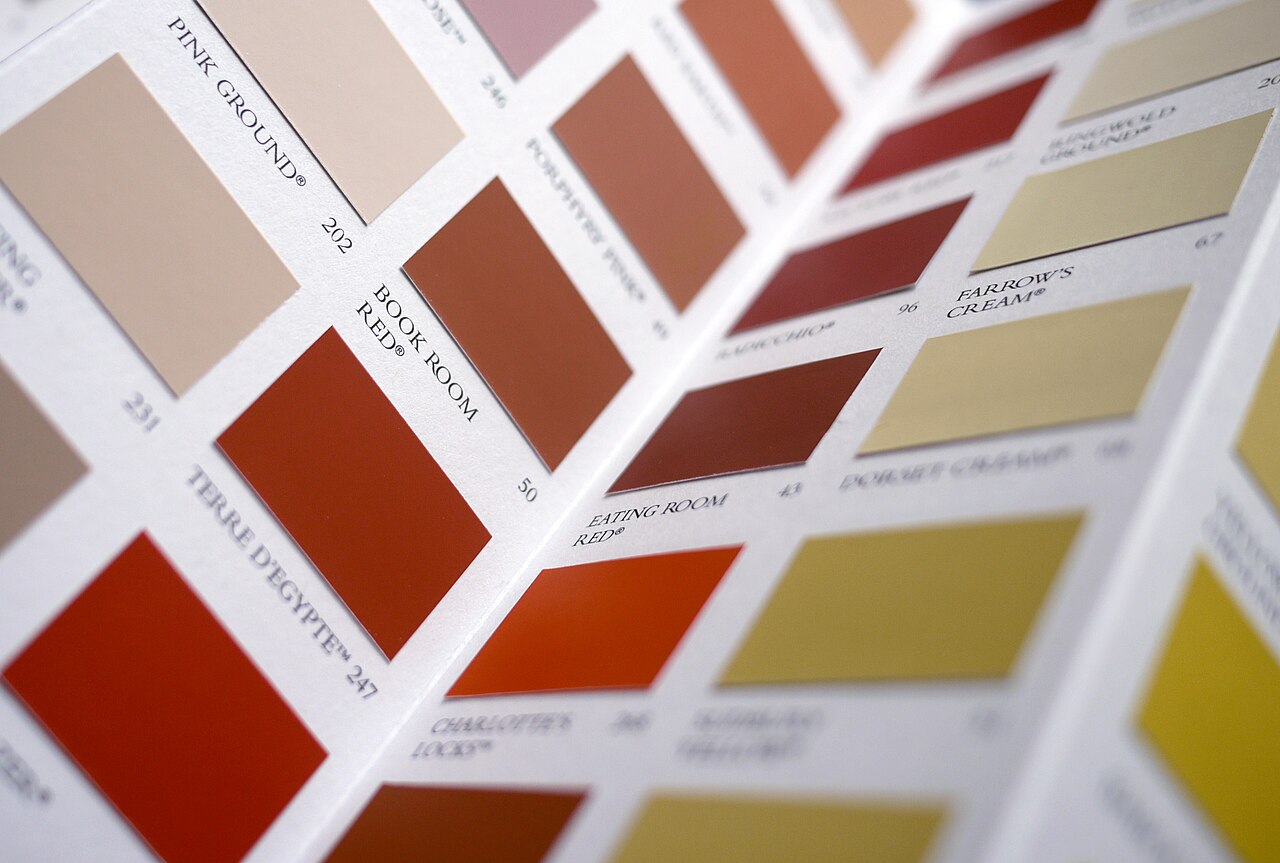
A Short History of Colour in the British Home
For most of history, colour in the home was a matter of cost. In Georgian houses, the everyday palette was one of stone colours, off-whites and drabs, made from cheap earth pigments, while strong greens, blues and yellows needed costly pigments and so said something about the people who could afford them. Walls were often finished in distemper or limewash, soft chalky finishes that let solid walls breathe, and woodwork in oil paint.
The Victorians brought new, brighter pigments and a taste for richer, darker rooms, and the 20th century brought ready-mixed paint in tins and, eventually, the brilliant white that covered so many walls in the 1960s and 1970s. The heritage colour revival of recent decades has been, in part, a reaction to that: a return to the subtler, more complex colours of old houses, mixed with traditional pigments and named with a nod to history.
The Heritage Paint Makers
Farrow & Ball
The best known of them all was started in 1946 by two chemists, John Farrow and Richard Ball, at Wimborne Minster in Dorset, and it still makes its paint there. Farrow & Ball has worked with the National Trust to create near-exact matches of colours used in restoring historic buildings, and in 2010 it became the first manufacturer to switch entirely to water-based paints. Its colour card holds 132 colours, with famously evocative names, and it makes wallpapers too.
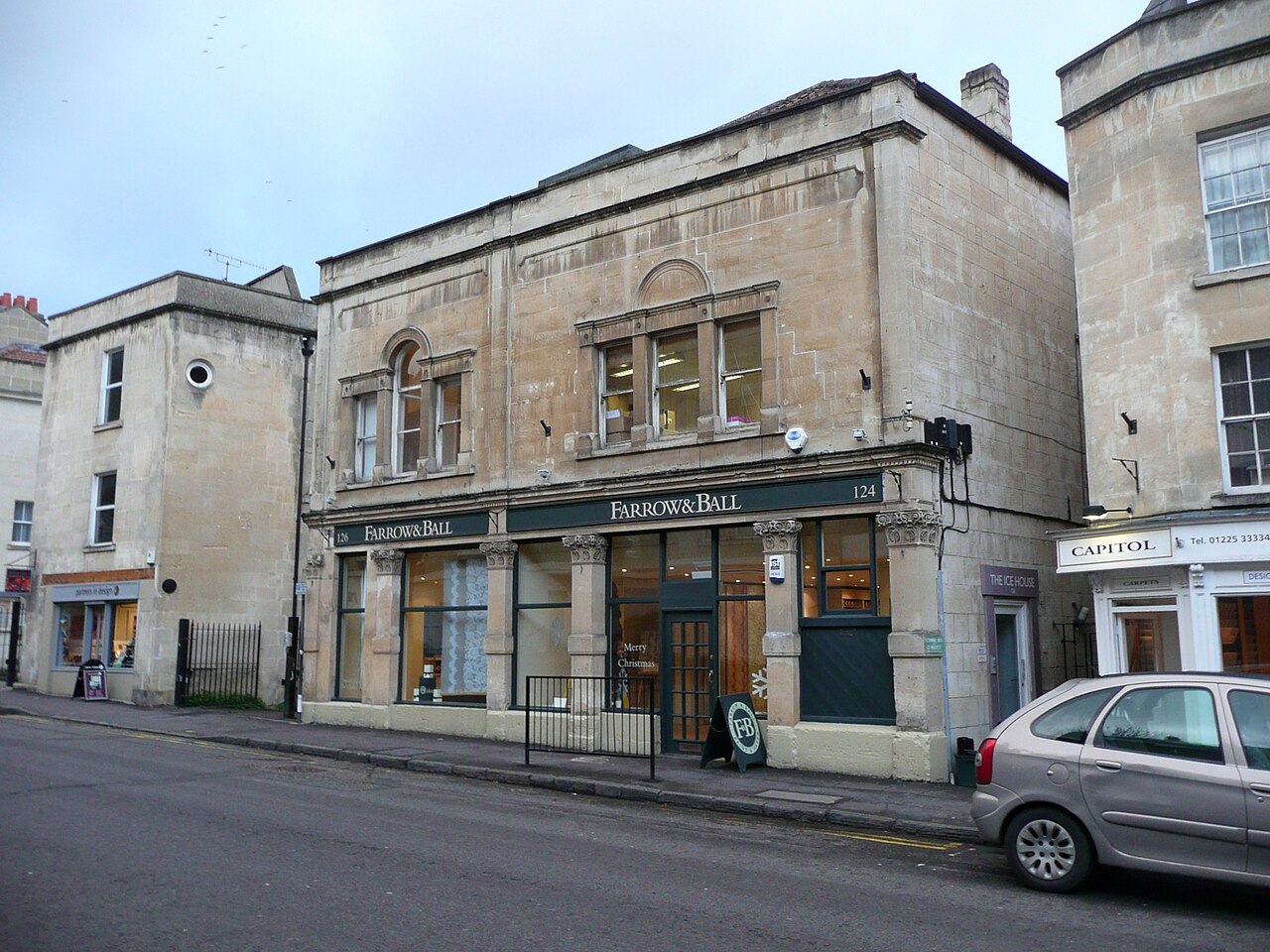
You can visit its home at the Farrow & Ball Visitor Centre beside the factory near Wimborne, which has its own café, The Sample Pot, and there are showrooms from Bath, on Walcot Street, to Harrogate, Edinburgh and Winchester, just off the cathedral close.
Little Greene
Little Greene is a family business founded by the chemist David Mottershead and still run by his family, based in Manchester with a factory in Wales. It has a partnership with the National Trust to develop designs based on the Trust's collections and to create materials for restorations, and its papers draw on historic patterns. Its showroom at Wilmslow, close to the company's Manchester headquarters, has a colour wall of the full palette, painted brush-out boards and wallpaper books.
Natural paints, and the furniture makers
Edward Bulmer Natural Paint sells online, with a colour chart, painted A5 swatches and 60ml sample pots, and a calculator to work out how much you need. Neptune has its own paint collection, chosen to sit with its kitchens and furniture, and its staff will help you build a palette for the whole house.
The independent stockists
Some of the best advice comes from independent decorating merchants, many of them family businesses that have been mixing paint for generations. Robinson & Neal, established in 1899, has branches in Chester, Liverpool and Birkenhead; W J Gardner (Rabart) has been trading in Wales for over 100 years; The Paint Shed was founded in Edinburgh in 1992 and now has shops across Scotland; and in Belfast Criterion Interiors has been a family business since 1971. Brewers decorator centres stock the heritage brands across England and Wales, and several have been chosen by Farrow & Ball as Premium Stockists.
The Story of British Wallpaper
Britain has a wallpaper tradition to rival any in the world. In the 19th century, the architect A. W. N. Pugin designed bold Gothic Revival papers for the new Palace of Westminster, with flat, stylised patterns that broke with the fashion for imitation of real flowers and fabric.

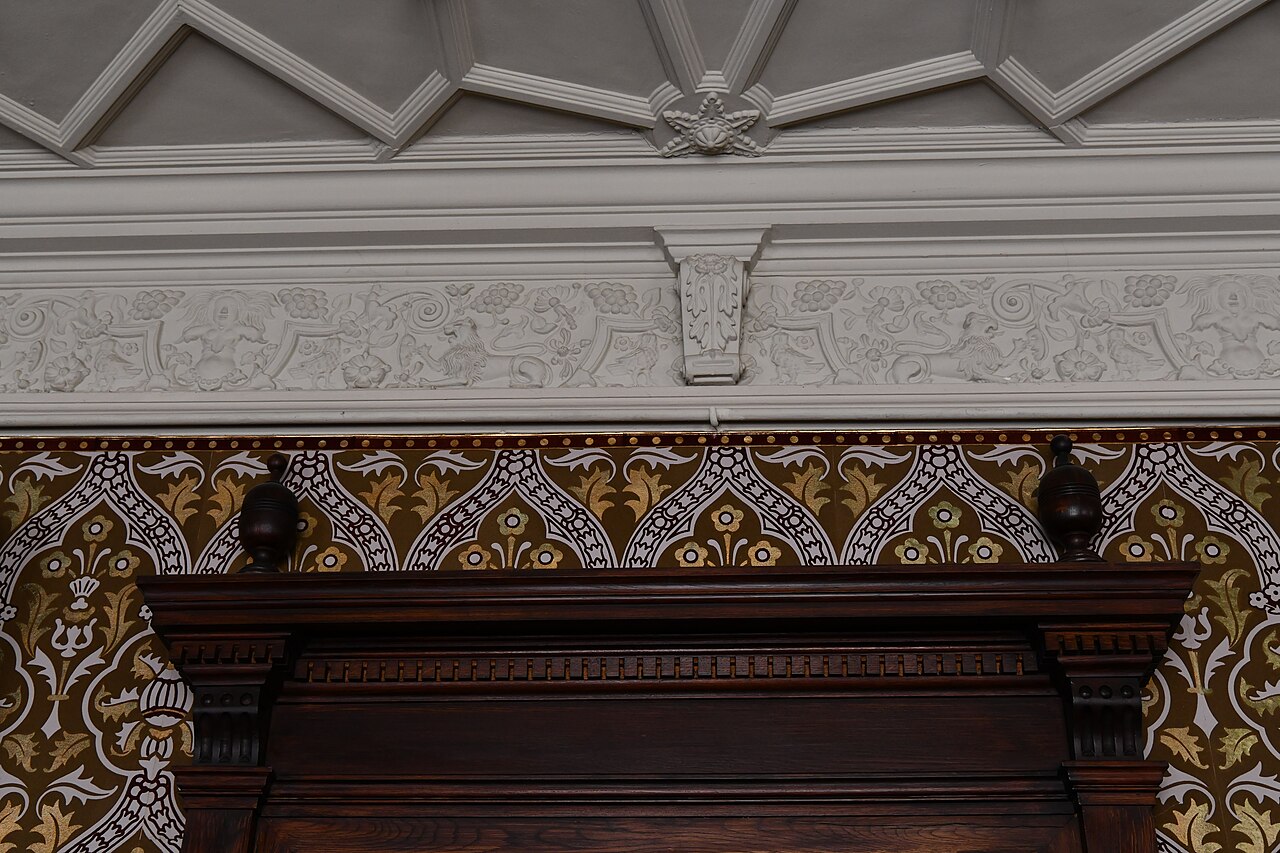
You can see his influence in country houses too. At Gawthorpe Hall in Lancashire, a wallpaper made to Pugin's design sits beneath plasterwork of 1603, a reminder that a strong pattern can hold its own in the grandest of rooms.
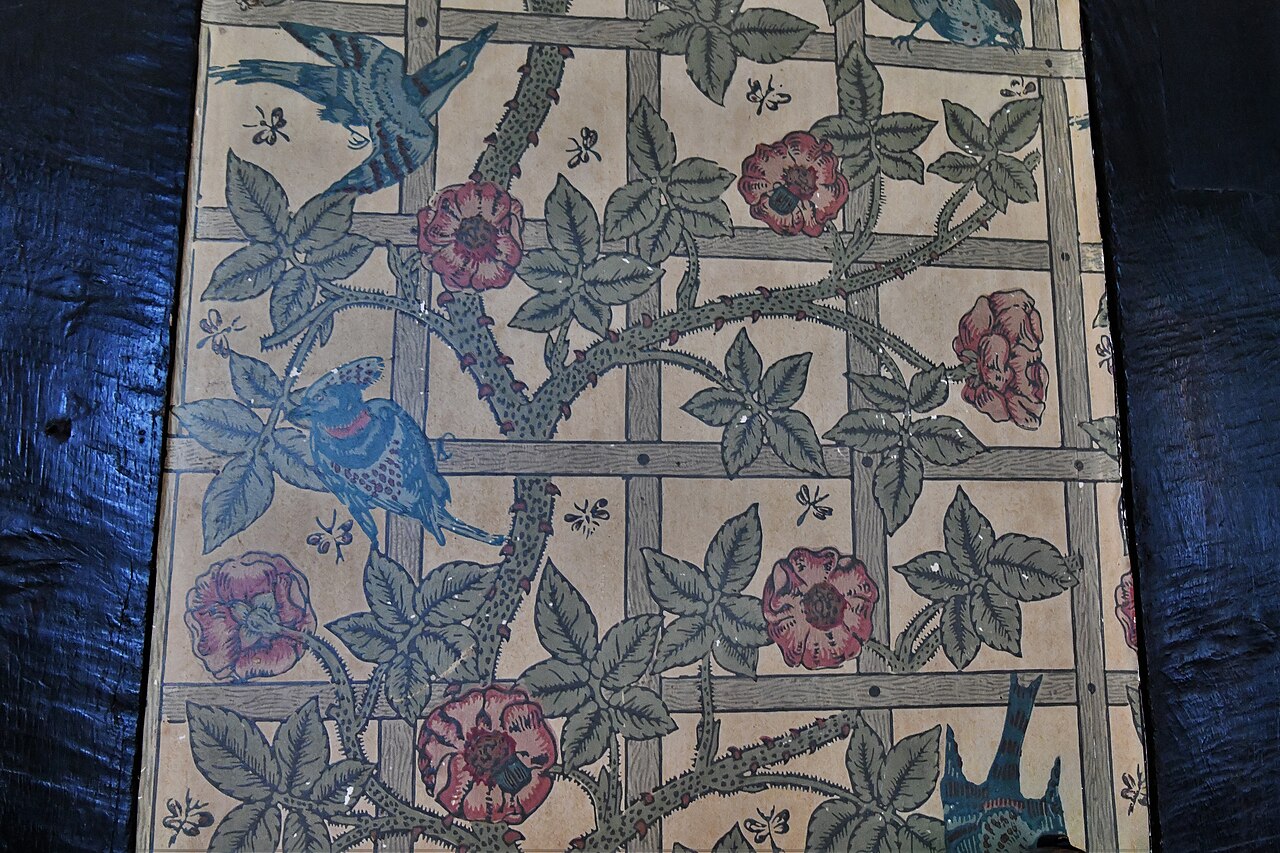
Then came William Morris. His first wallpaper, Trellis, designed in 1862, was inspired by the rose trellis in the garden of his home, Red House in Bexleyheath; Daisy followed in 1864 and Fruit in 1865. Nearly all his papers were printed with hand-cut woodblocks, and he produced more than 50 wallpapers in his career. Original Trellis paper still hangs in a corridor at Speke Hall, the Tudor house near Liverpool cared for by the National Trust.
Red House itself, now also cared for by the National Trust, shows how Morris and his friends used colour and pattern together, from painted furniture to decorated walls. When Morris & Co. was dissolved in 1940, the wallpaper business was bought by Sanderson, the firm founded in London in 1860 by Arthur Sanderson, who began by importing French wallpapers, and Morris designs are still printed today.
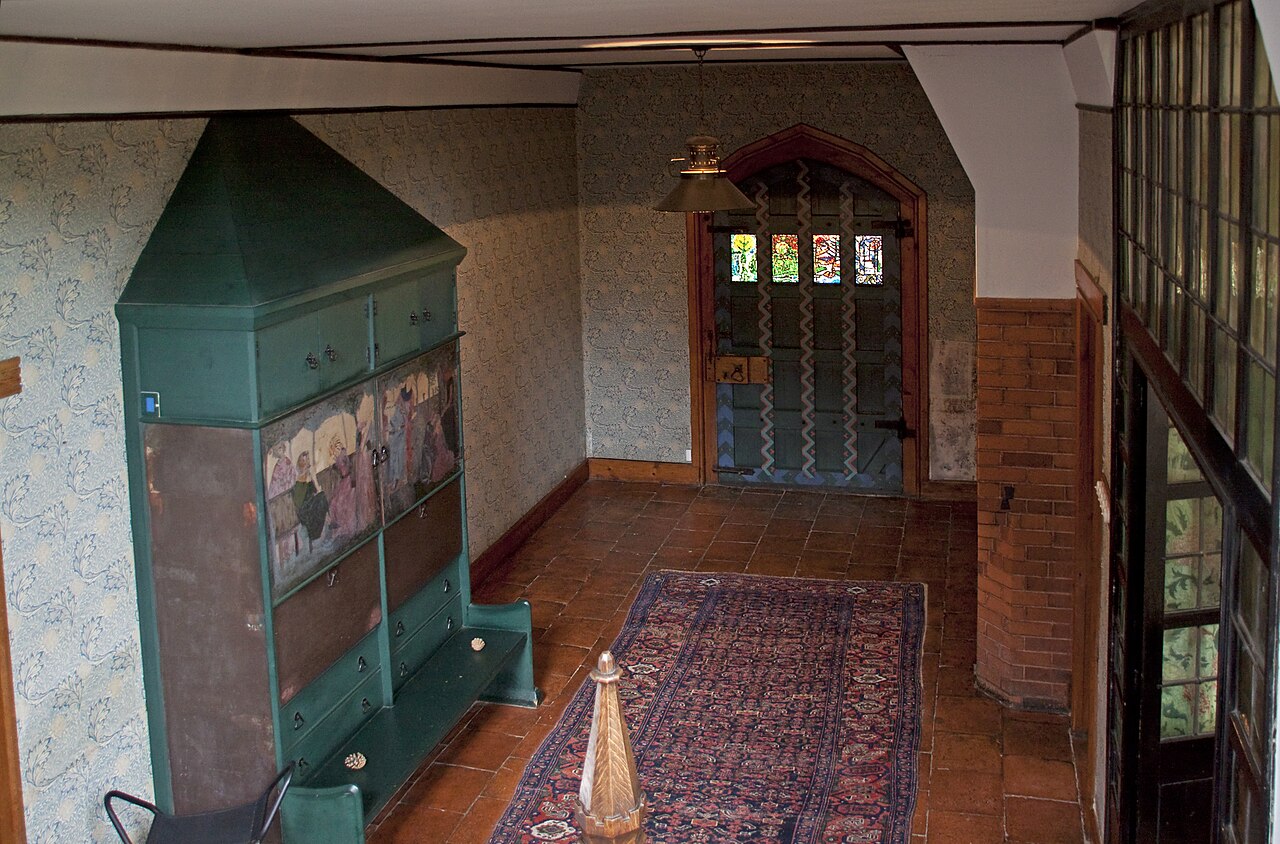
Most paint showrooms and decorating merchants keep wallpaper books from the heritage houses. Chapel Interiors in Wilmslow has an extensive range of designer papers, Bespoke Decor NI specialises in Farrow & Ball wallpapers, and Paint & Paper has specialised in designer wallpaper and paint since 1995.
How to Choose a Colour
Start with the light
The direction a room faces changes everything. North-facing rooms have a cool, steady light that can make greys look cold, so warmer colours with a hint of red or yellow often sit better there. South-facing rooms are bathed in warm light that flatters almost anything, including cooler blues and greens. East- and west-facing rooms change through the day, so think about when you use the room most.
Think about the whole house
Colours look best when they relate to each other from room to room, especially where you can see through one door into the next. Many paint makers group their colours into families that work together, and the showroom staff will help you build a palette. Decide too what you will do with woodwork and ceilings: the same colour in different finishes, a paler tone of the wall colour, or a crisp contrast all give very different effects.
Choose the right finish
Matt finishes give walls the soft, chalky look of old houses; eggshell and other tougher finishes suit woodwork, kitchens and bathrooms. If you live in an old house with solid walls and lime plaster, ask about breathable finishes such as limewash, distemper or clay paints, which let the walls dry out; a specialist supplier or conservation officer can advise.
How to Sample Properly
A colour card is a starting point, never the final word. Buy sample pots of your shortlist, or order painted swatches, and paint them large, at least the size of a sheet of A4, with two coats, just as you would on the wall. Painting on lining paper or card means you can move them around the room, and keeping a white border around each stops the old wall colour from confusing your eye.
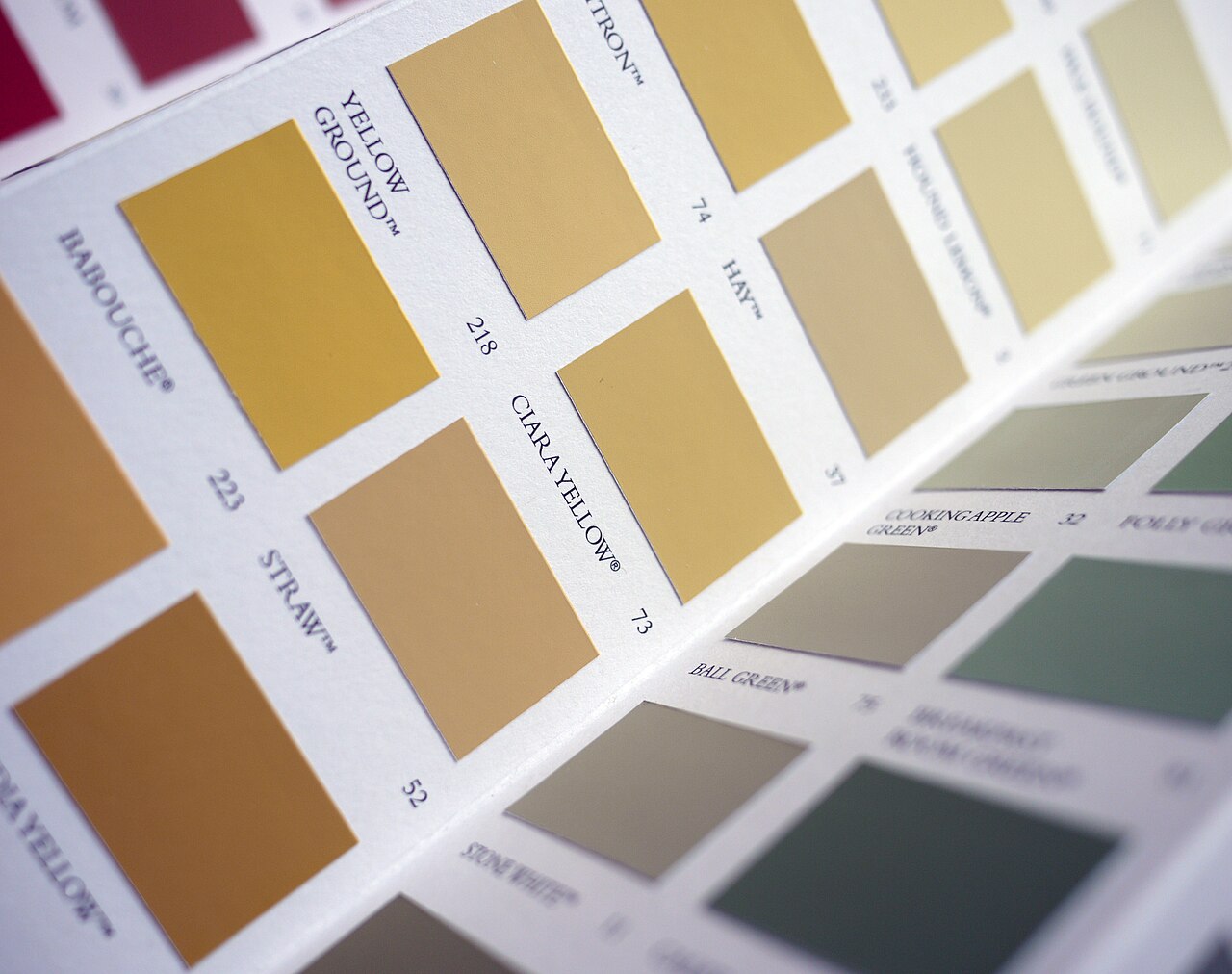
Then live with them for a few days. Look at your samples in the morning, at midday and in the evening under your own lamps, on the darkest wall and the lightest, and beside your floor, curtains and furniture. A colour that looks perfect on the card can turn surprisingly green, pink or grey on a wall, and it is far easier to find out with a sample pot than with a whole room.
Paint & Wallpaper Showrooms by Region
Every paint showroom, decorating merchant and wallpaper specialist in our directory has been checked, and each region's page includes the heritage paint you can order online. Choose a region to find a showroom or stockist near you:
- Paint and wallpaper showrooms and stockists in the North of England
- Paint and wallpaper showrooms and stockists in the East of England
- Paint and wallpaper showrooms and stockists in the South of England
- Paint and wallpaper showrooms and stockists in the West of England
- Paint and wallpaper showrooms and stockists in Scotland
- Paint and wallpaper showrooms and stockists in Wales
- Paint and wallpaper showrooms and stockists in Northern Ireland
- Heritage paint online, delivered UK-wide
Our Advice
Our advice: Fall in love with a colour, then test it properly: paint big samples, look at them in every light, and choose for the room you have, not the photograph you saw. Visit a showroom or a good independent stockist for advice, because the people who mix paint every day know which colours behave. And to see what heritage colour and pattern can do, spend an afternoon at Red House or Speke Hall, then find your nearest stockist in our directory.
Facts checked October 2026. Sources: Wikipedia: Farrow & Ball · Wikipedia: Little Greene · Wikipedia: Arthur Sanderson & Sons · vam.ac.uk · farrow-ball.com · littlegreene.com · edwardbulmerpaint.co.uk · nationaltrust.org.uk · nationaltrust.org.uk · nationaltrust.org.uk. Ranges, colours and opening hours change, so please check with the showroom or stockist before you visit.