Garden & Home Directory · The Guide
The British Kitchen: From the Victorian Range to the Shaker Revival, and How to Choose Yours
The kitchen has become the heart of the British home: the room where you cook, eat, work, talk and gather at the end of the day. It is also the room most of us spend the most on, and choosing one can feel daunting. The good news is that Britain has some of the finest kitchen makers in the world, from national names with a showroom in every county to small workshops where one cabinet-maker will build every drawer.
This guide follows the British kitchen from the Victorian country house to the fitted kitchen and the Shaker revival, introduces the makers behind today's best kitchens, and shares what we have learned about choosing a kitchen studio, with links throughout to the kitchen showrooms we have checked in every region.
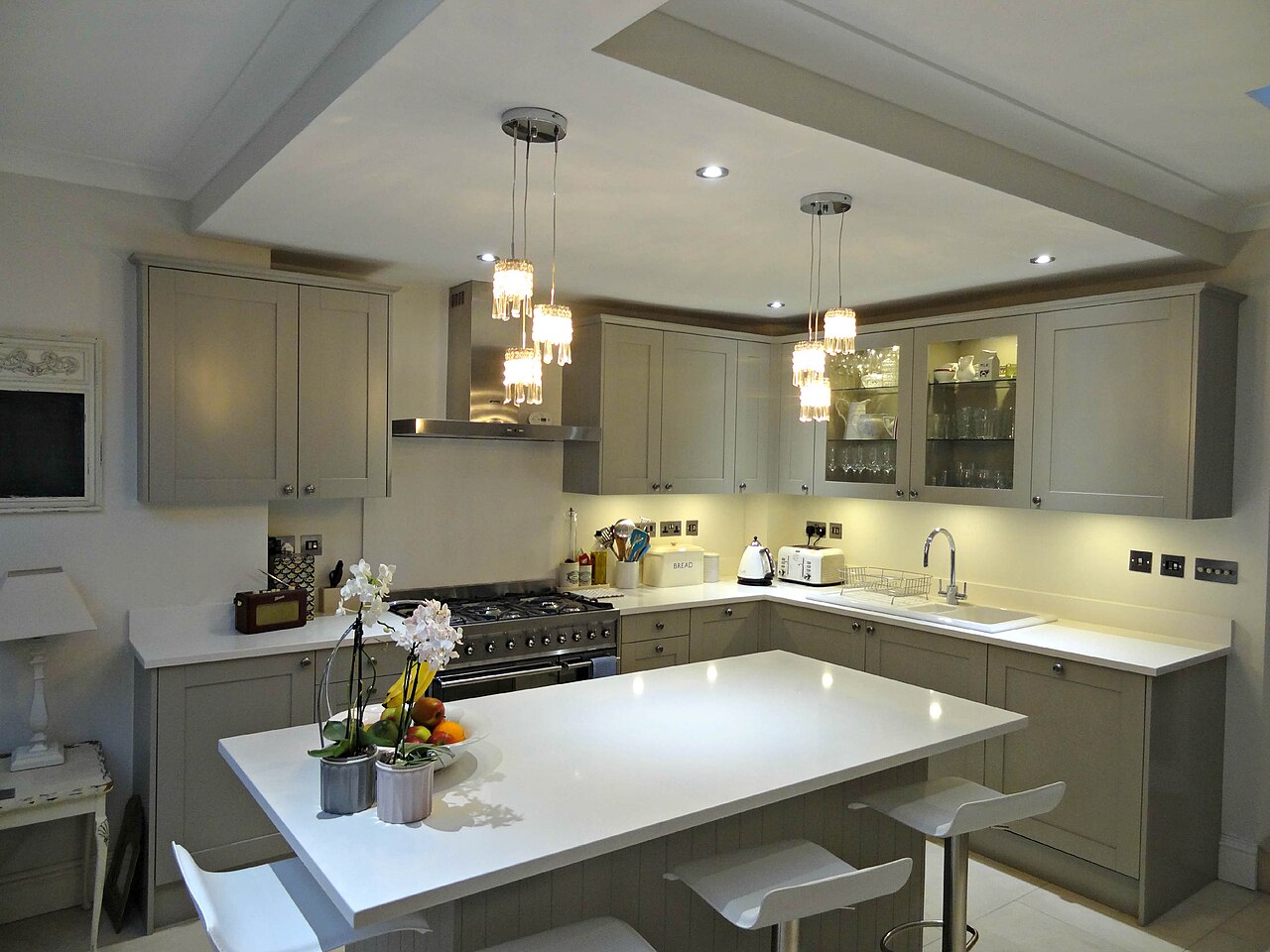
The Victorian Kitchen
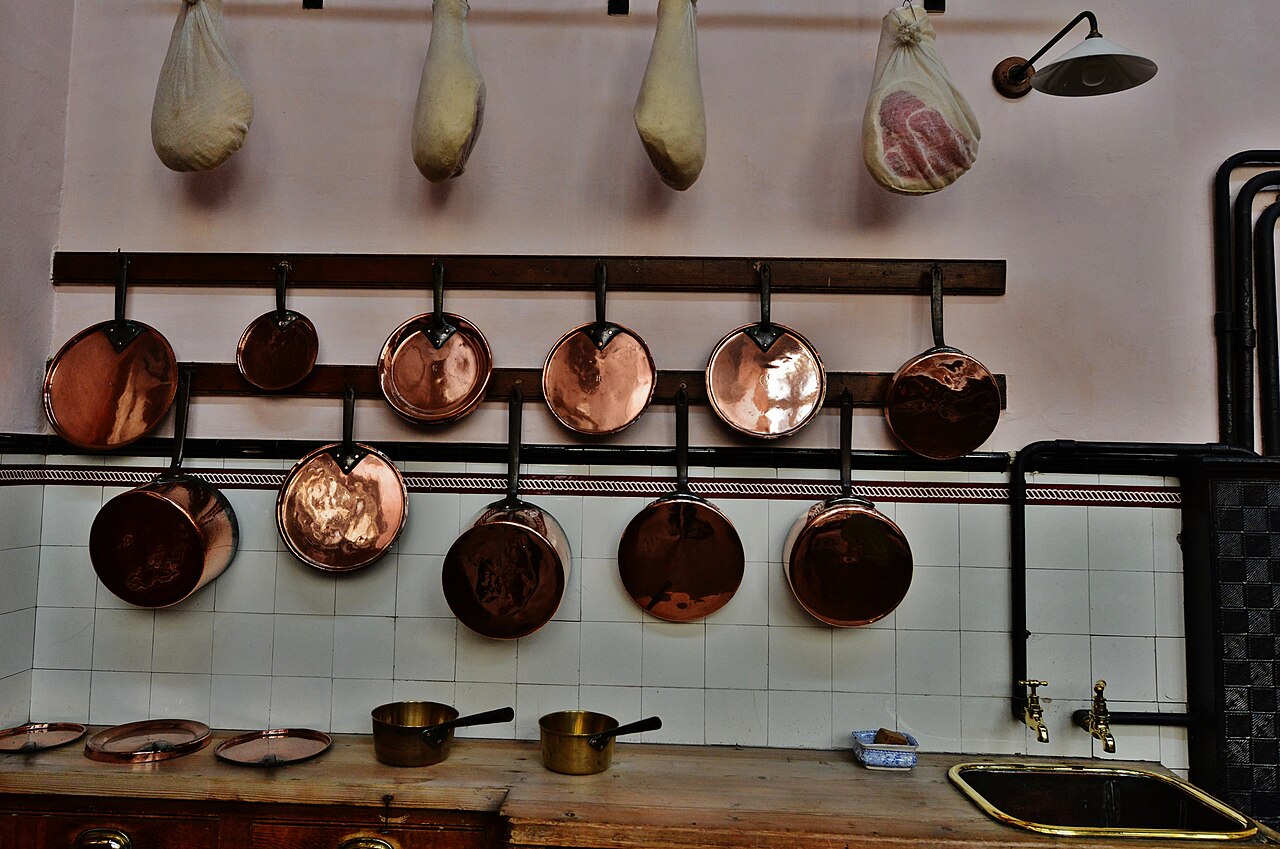
In a Victorian country house, the kitchen was a world of its own. It sat in a service wing, often well away from the dining room, and around it ran a whole suite of rooms: the scullery for washing up and preparing vegetables, the larder for meat and game, the dairy, the pantry for china and silver and, in the grandest houses, a bakehouse and a still room. A cook and a team of maids worked there from before dawn, and few of the family who ate the food ever saw it being made.
You can still step into these kitchens. At Lanhydrock in Cornwall, cared for by the National Trust since 1953, a fire that began in the kitchen on 4 April 1881 destroyed the south wing, and the family rebuilt the house with a new kitchen block in the style of the old. The tour takes in the service rooms, where copper pans line the shelves, and English Heritage's Audley End in Essex brings its 1880s service wing to life through the story of its cook, Avis Crocombe.
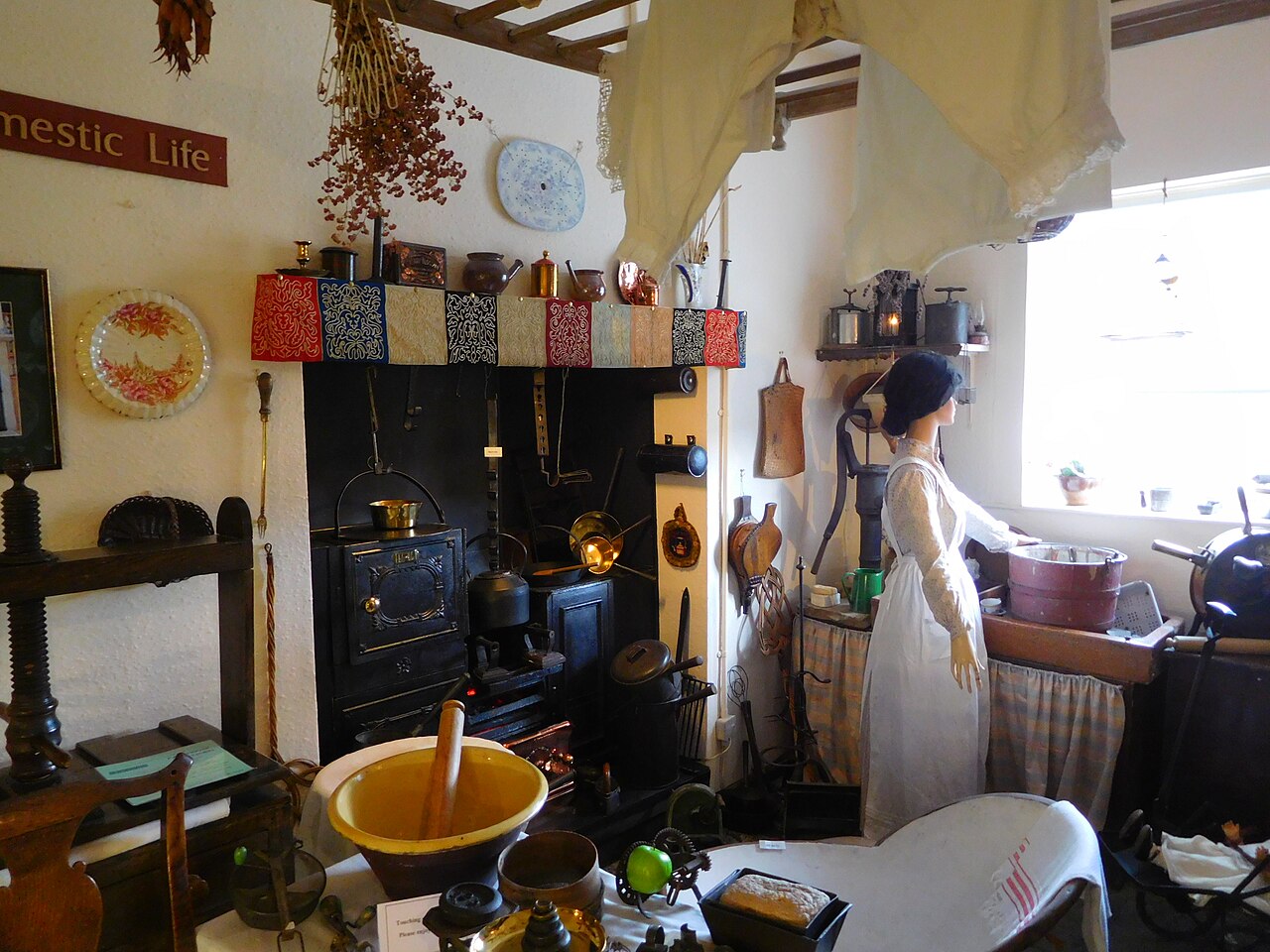
The heart of the Victorian kitchen was the cast-iron range, a coal fire set between an oven and a boiler for hot water, with a hotplate above. It had to be lit early, fed all day and blackleaded to keep it gleaming, and it was the reason the kitchen was the warmest room in the house.
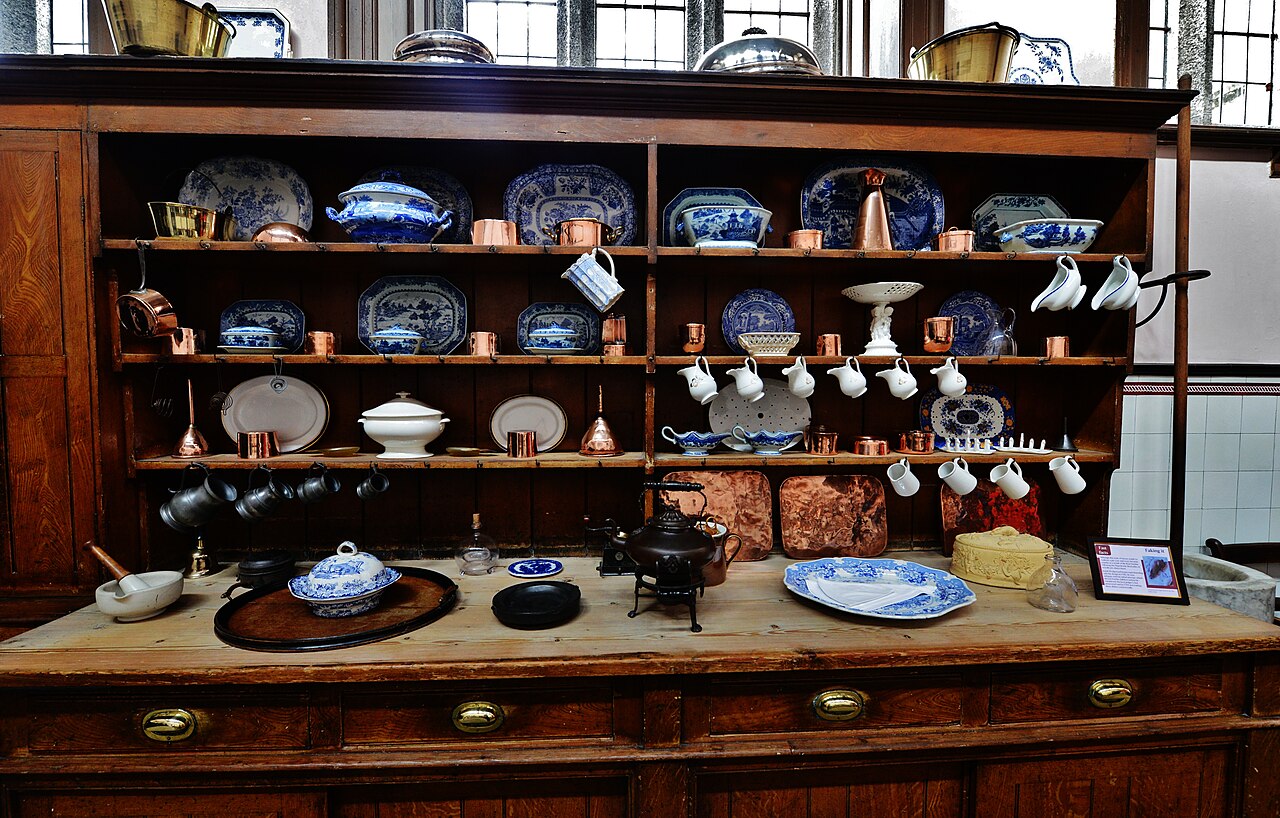
Beside it stood the dresser, the great piece of kitchen furniture, with open shelves for plates above and cupboards and drawers below. It is the ancestor of every painted kitchen cabinet in Britain today, and an old pine or oak dresser is still one of the most sought-after pieces in any antiques centre.
The Aga and the Country Kitchen
In the 20th century one cooker came to stand for the British country kitchen. The Aga was invented in 1922 by the Nobel Prize-winning Swedish physicist Gustaf Dalén, who used the principle of heat storage to combine a heat source, two large hotplates and two ovens in one cast-iron unit. It arrived in Britain in 1929, was being made here under licence by the early 1930s, and its cream enamel became so much part of the farmhouse kitchen that the 1990s gave a name, the Aga saga, to a whole genre of novels set around one.
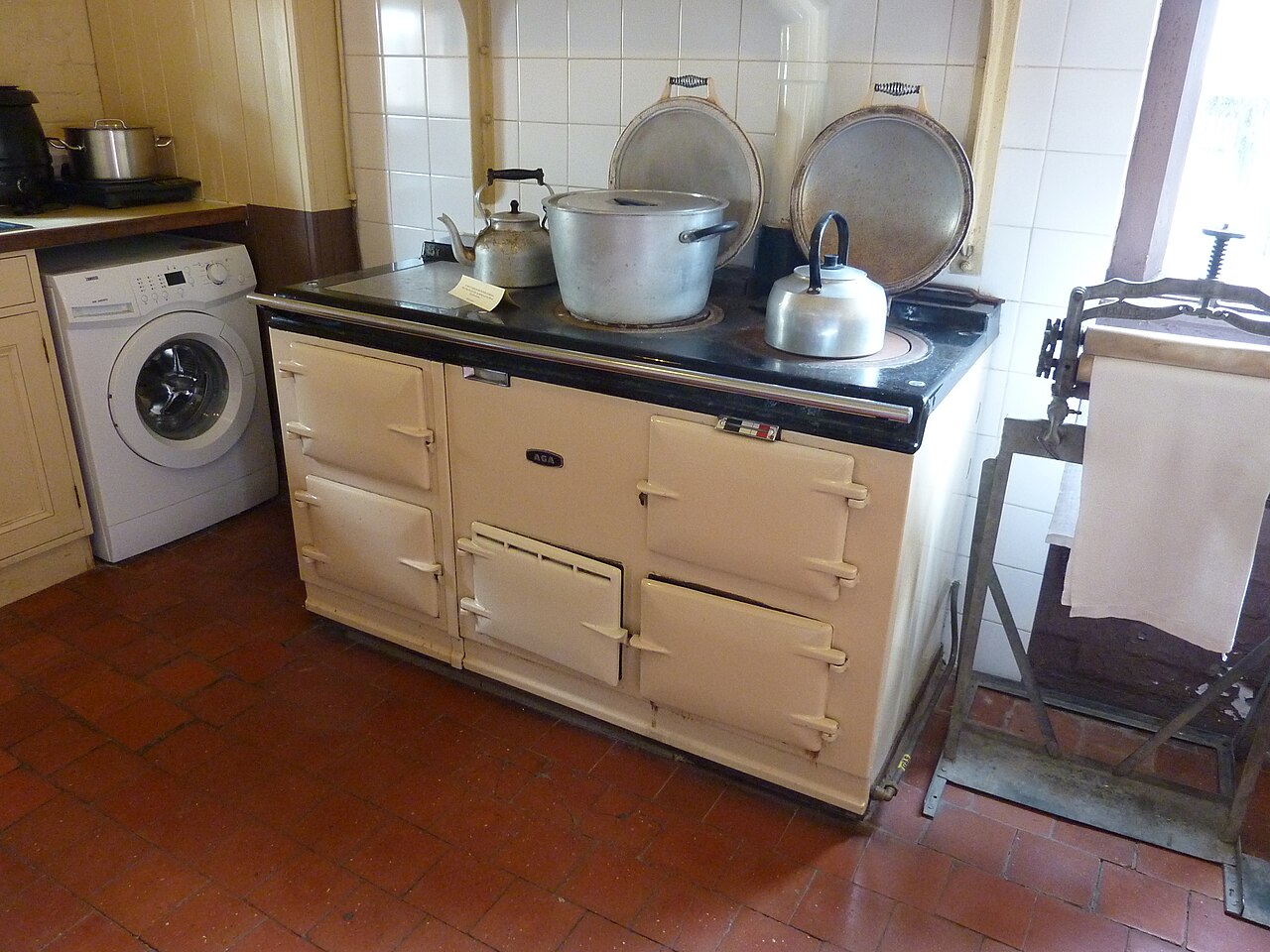
Many Agas run for decades, and a range cooker of one kind or another remains the centrepiece of a great many British kitchens. Modern models can be switched off when you do not need them, which is worth asking about if you are planning around one.
The Fitted Kitchen Arrives
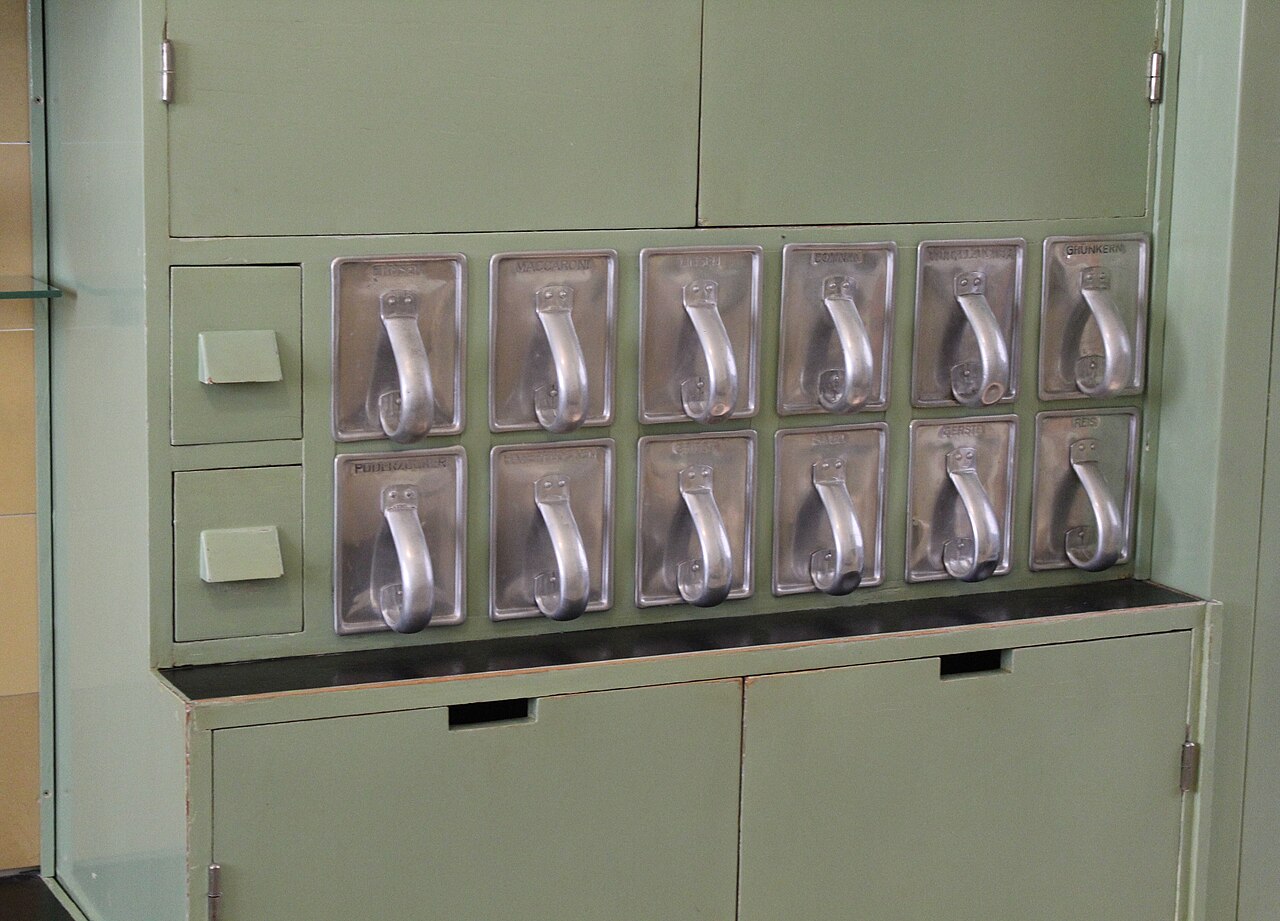
The fitted kitchen, with its continuous worktops and matching wall and base cupboards, was born not in Britain but in Germany. In 1926 the Austrian architect Margarete Schütte-Lihotzky designed the Frankfurt kitchen for new social housing in the city: a narrow room of 1.9 by 3.4 metres, planned like a ship's galley so that everything was within reach. Some 10,000 were built in the late 1920s, and it is seen as the forerunner of the modern fitted kitchen. The V&A holds one, which you can see at the V&A East Storehouse in London.
In Britain, the fitted kitchen took hold after the Second World War, as servants disappeared from all but the grandest houses, new homes were built, and the kitchen became a room the family used and was proud of. Later decades opened the kitchen up to the dining room and garden, and the kitchen with an island, a table and a sofa at one end is now the room most British families live in.
The Shaker Revival
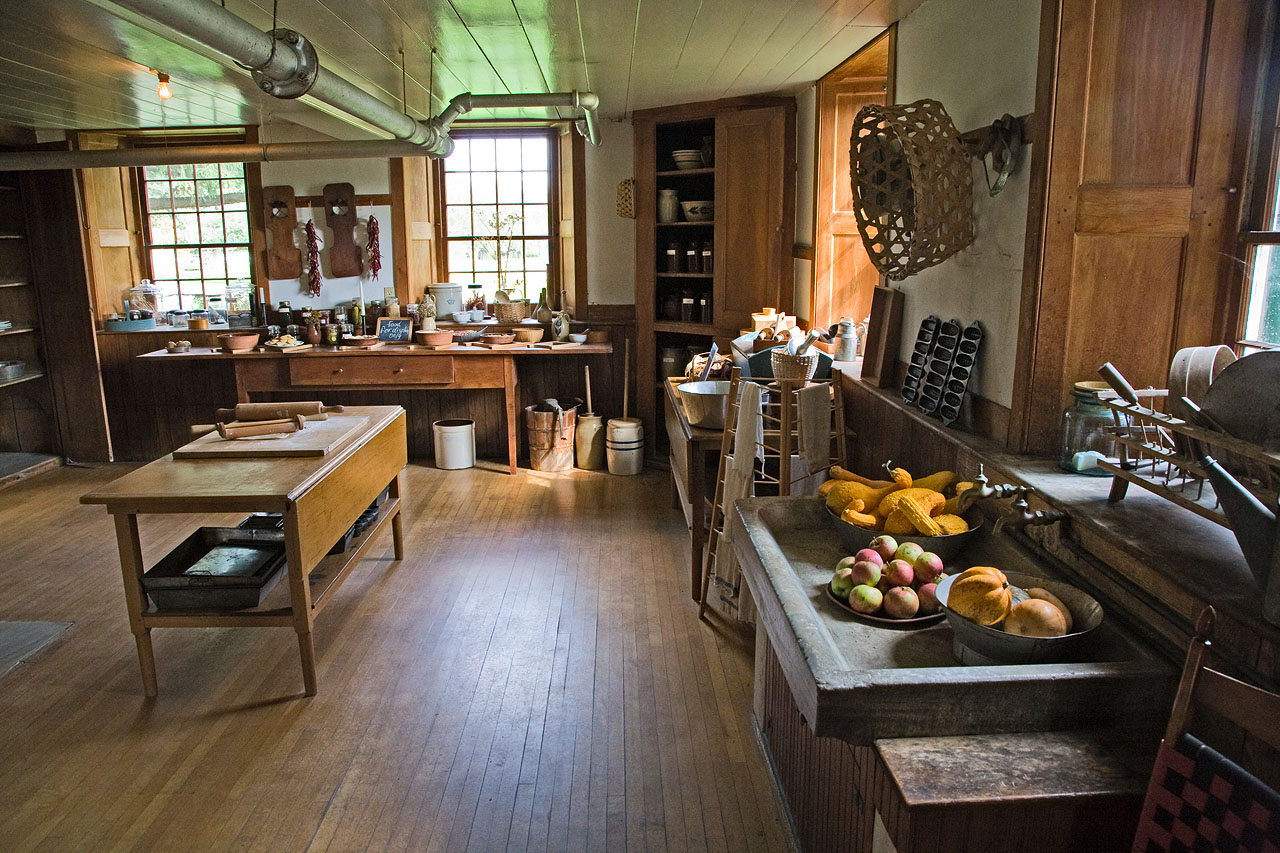
If one style defines the British kitchen today, it is Shaker. The Shakers, formally the United Society of Believers in Christ's Second Appearing, were a religious community in the United States whose furniture was guided by simplicity, utility and honesty. They avoided carving, inlay and veneers, used wooden knobs instead of metal pulls, and built cupboards with flat panels set in a plain frame, often in cherry, maple or pine and sometimes painted in soft blues, reds, yellows and greens.
That plain framed door is what we now call a Shaker door, and British makers have made it their own. deVOL was founded in 1989 by two Loughborough University design graduates, Philip deVries and Paul O'Leary, and its Real Shaker Kitchen has become one of the best-known kitchens in the country; its showrooms at Cotes Mill, a former mill house just beyond Loughborough, have welcomed visitors since 2013. Harvey Jones has been designing and building bespoke kitchens since 1977, hand-painting them in your home once they are fitted, and calls its Shaker range a timeless favourite.
Tom Howley, whose first showroom was in Altrincham, now has at least twenty showrooms of hand-crafted kitchens from Harrogate to Bristol, and Neptune, whose very first store was in Winchester, sells solid timber kitchens alongside its furniture and paint; in October 2026 it is due to open its first department-store showroom, inside Fenwick in Newcastle. The beauty of the style is its restraint: a Shaker kitchen looks equally at home in a Georgian townhouse, a farmhouse or a new build, and it changes character completely with a new paint colour.
Bespoke Makers and Independent Workshops
Beyond the national names, Britain is rich in independent kitchen makers, many of them small family workshops building every cabinet by hand. In Surrey and Kent, Martin Moore makes its kitchens in its own workshops, and David Haugh Kitchens works from a workshop near Tunbridge Wells. In the South West, Barnes of Ashburton makes every kitchen in its Devon workshop and McCulloch Furniture shows its work at the workshop in Somerset.
Further afield, Chalkhouse Kitchens and Quails Interiors design and make bespoke kitchens in South Wales, The Kitchen Depot in Edinburgh is a family-run showroom whose kitchens are made locally, and in Belfast Wrights Design House and Carters Workshop build kitchens in their own workshops. For grand, highly decorated cabinetry, Clive Christian has a showroom in Glasgow. And if your budget is tighter, Naked Kitchens makes kitchens to order in eight cabinet door styles, with a lower-priced sister range, 80/20.
How to Choose a Kitchen Studio
Do your homework first
Before you visit a showroom, measure the room, note the position of windows, doors, radiators, drains and sockets, and gather photographs of kitchens you love. Think about how you really live: how many people cook at once, whether you need a table, where the shopping lands, and where the dog sleeps. A good designer will ask all of this, but the more you know, the better the first drawings will be.
Understand what you are buying
Ask what the cabinets are made of, whether solid timber, plywood or MDF, and how the doors are hung. An in-frame door, set inside a face frame as on a true Shaker cabinet, is the classic choice, while a lay-on door sits over the front of the cabinet and is usually less expensive. Ask too whether the kitchen is painted in the workshop or by hand in your home, and what happens when it needs a touch-up in years to come.
Compare like with like
When you collect quotes, check exactly what is included: worktops, sinks and taps, appliances, fitting, plumbing, electrics, tiling and the removal of the old kitchen. Ask about lead times, who manages the fitting, and what the guarantee covers. Larders, pantries and boot rooms, such as the walk-in pantry at Tom Howley St Albans, add storage and are worth seeing in a showroom before you decide whether you have room for one.
Visit, and visit again
Showrooms let you open the drawers, feel the weight of a door and stand at an island to judge its height. Visit more than one, take your measurements with you, and go back once you have a design to see the finishes in daylight. A paint colour that sings under showroom lights can look very different in a north-facing room.
Kitchen Showrooms by Region
Every kitchen showroom and maker in our directory has been checked, and each region's page includes the kitchen companies you can order from online. Choose a region to find a showroom near you:
- Kitchen showrooms and makers in the North of England
- Kitchen showrooms and makers in the East of England
- Kitchen showrooms and makers in the South of England
- Kitchen showrooms and makers in the West of England
- Kitchen showrooms and makers in Scotland
- Kitchen showrooms and makers in Wales
- Kitchen showrooms and makers in Northern Ireland
- Kitchens to order online, delivered UK-wide
Our Advice
Our advice: Start with how you live, not with a catalogue: plan the room around cooking, eating and storage, then choose a style that suits the house. Visit at least two showrooms, compare quotes line by line, and ask to see a kitchen a maker has fitted. A well-made Shaker kitchen in a colour you love will outlast many fashions, and you will find the national names and the best independent workshops region by region in our directory.
Facts checked October 2026. Sources: Wikipedia: Lanhydrock House · english-heritage.org.uk · Wikipedia: AGA cooker · Wikipedia: Frankfurt kitchen · Wikipedia: Shaker furniture · devolkitchens.co.uk · harveyjones.com · tomhowley.co.uk · neptune.com · kbbfocus.com · nakedkitchens.com. Showrooms open, move and change their opening hours, so please check before you visit, and book a design appointment where one is needed.