Villages & Towns · Suffolk
Lavenham, Suffolk: Medieval Wool Village, History & Things to Do
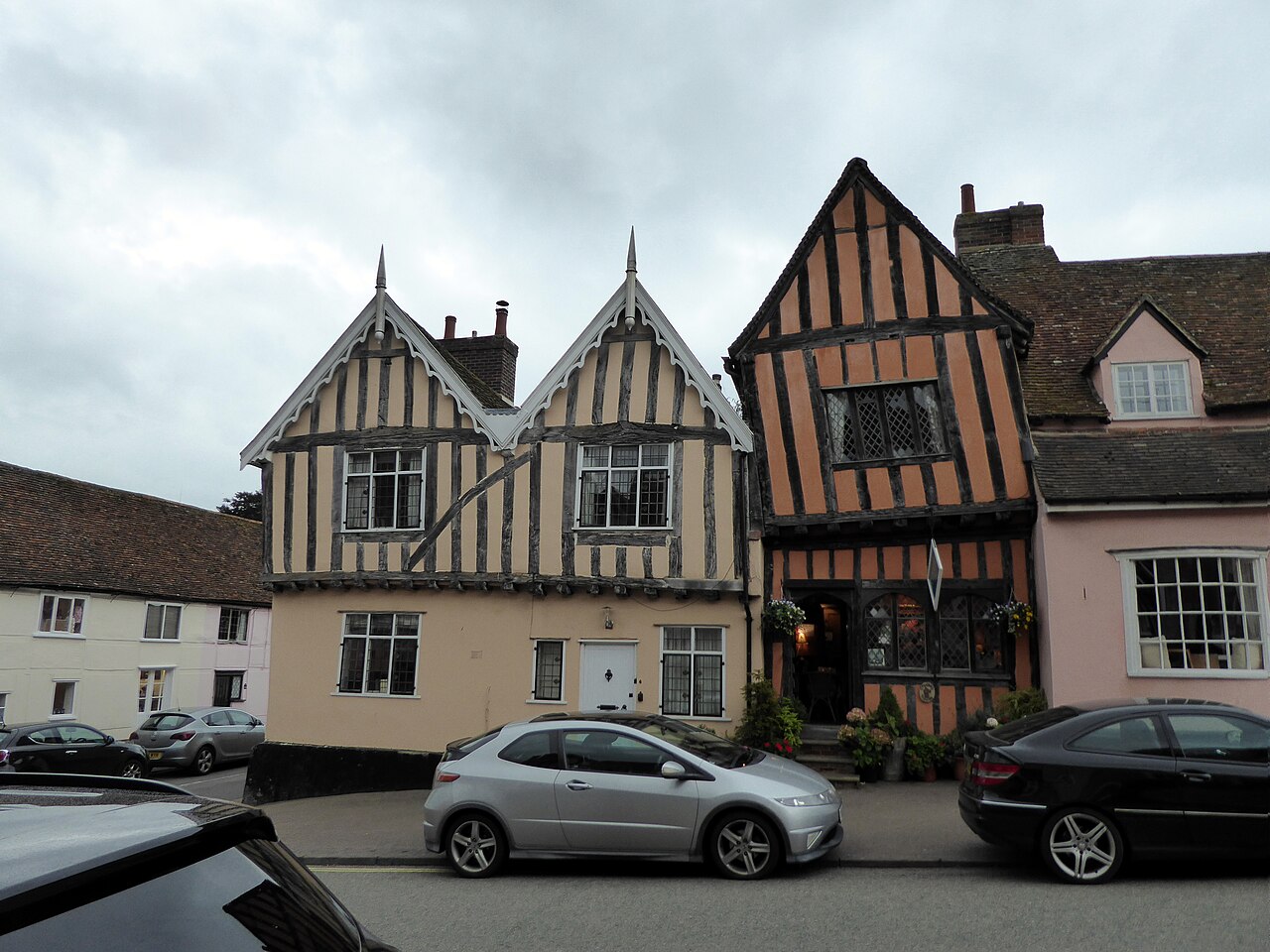
Lavenham lies in the gentle countryside of south Suffolk, between Sudbury and Bury St Edmunds. Its streets are lined with more than three hundred listed buildings, most of them timber-framed houses painted in soft Suffolk colours, leaning and sagging at improbable angles.
Why Lavenham Is Special
Lavenham is often called the finest medieval village in England, and walking its streets you can see why. Little has been built here since the wool trade moved away in the 16th century, so the village our ancestors knew survives almost intact.
Its crooked houses, great church and Guildhall make it a joy to explore on foot, and there are tea rooms, galleries and inns to linger in along the way.
The History of Lavenham
Lavenham prospered from the wool trade in the 15th and 16th centuries, when its blue broadcloth was exported far and wide. In the medieval period it was among the twenty wealthiest settlements in England, and by the late 15th century it paid more in tax than much larger towns such as York and Lincoln.
That wealth built the church of St Peter and St Paul, a magnificent wool church on the hill at the top of the High Street, completed in 1525. It is far too large for the village, and its tower, 138 feet high, lays claim to being the tallest village church tower in Britain.
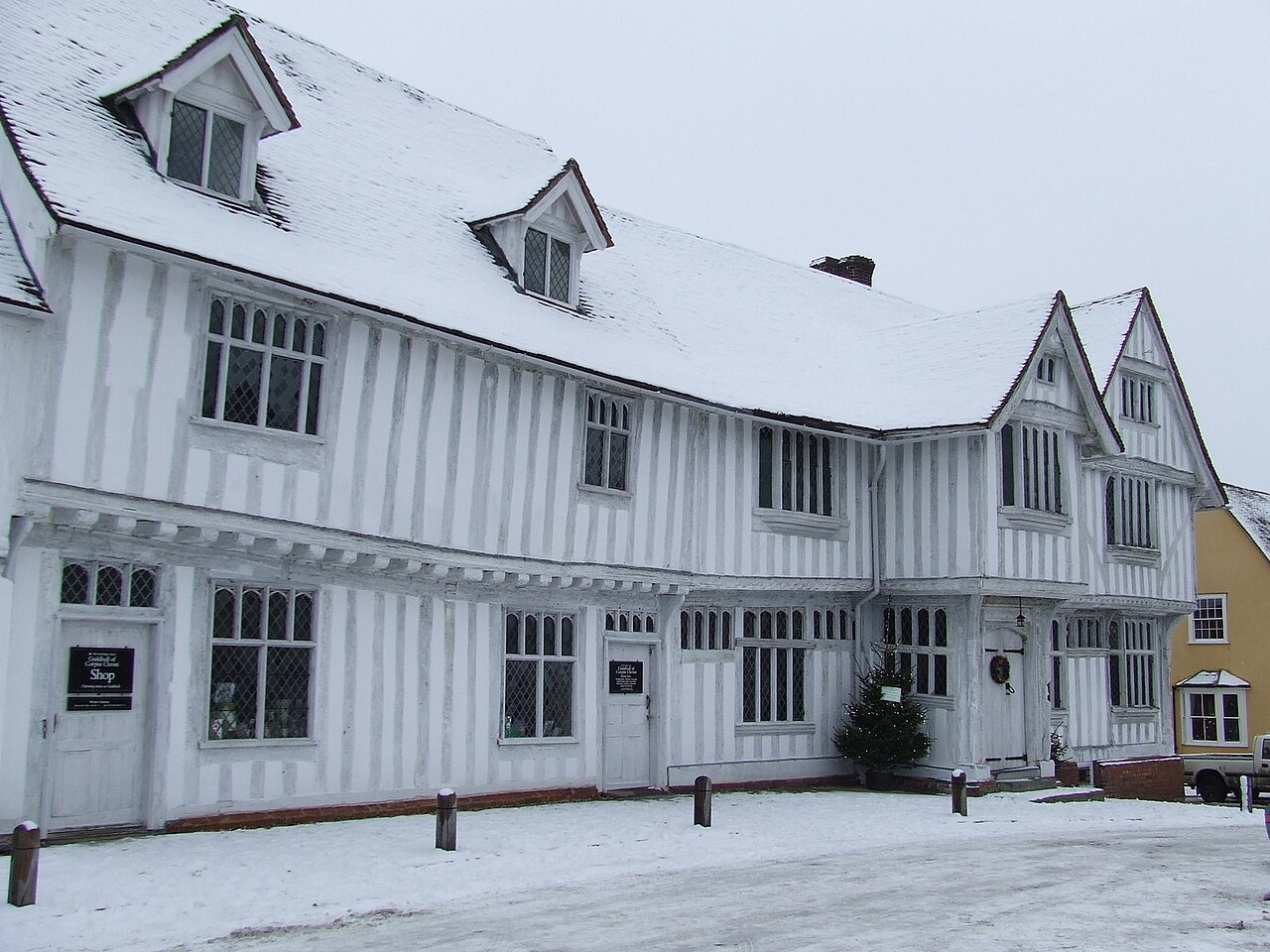
The Guildhall of the Guild of Corpus Christi was built in 1529 and stands overlooking the Market Place. It is now cared for by the National Trust. Nearby Little Hall is another fine medieval hall house open to visitors.
When the cloth trade declined, Lavenham became too poor to rebuild, which is why so much survives. In the late 18th century the poet Jane Taylor lived here, and it may have been in Shilling Street that she wrote The Star, the poem that gave us Twinkle, Twinkle, Little Star. More recently, De Vere House was used as the Potters' home in Godric's Hollow in Harry Potter and the Deathly Hallows: Part 1.
Things to Do in Lavenham
Begin at the Market Place with the Guildhall (check opening times) and Little Hall, then walk down the High Street and Water Street to see the most famous timber-framed houses, including the Crooked House and De Vere House.
Climb the hill to the church of St Peter and St Paul for its soaring nave and its carved chantry screens, then follow one of the circular walks out along the old railway line into the fields.
Gardens, Countryside & Antiques near Lavenham
For antiques, the Long Melford Antiques Fair is held in the next village, and Neptune Bury St Edmunds is in the market town to the north. Ickworth, with its great rotunda and Italianate garden, is just south-west of Bury.
Gardeners can visit Helmingham Hall Gardens and Perrywood Sudbury, and the Constable country of the Dedham Vale National Landscape is about half an hour away; see our guide to Dedham Vale.
Lavenham Through the Seasons
Spring brings blossom to the cottage gardens. Summer is the time for long evenings in the village inns. Autumn colours the Suffolk lanes, and at Christmas the timber-framed streets are at their most magical.
Getting to Lavenham
The nearest railway stations are Sudbury and Bury St Edmunds, with buses to the village, and there is parking in the village.
Lavenham: Questions & Answers
Why is Lavenham so well preserved?
Lavenham grew rich on the wool trade in the 15th and 16th centuries. When the trade declined, the village was too poor to rebuild, so its timber-framed houses survive.
Was Lavenham in Harry Potter?
Yes. De Vere House in Lavenham was used as the Potters' house in Godric's Hollow in Harry Potter and the Deathly Hallows: Part 1.
Our Advice
Our advice: Come on a weekday morning, see the Guildhall and church, then simply wander the side streets: the best houses are often round the next corner.
Facts checked October 2026. Sources: Wikipedia: Lavenham · nationaltrust.org.uk. Opening times and prices change, so please check before you travel.